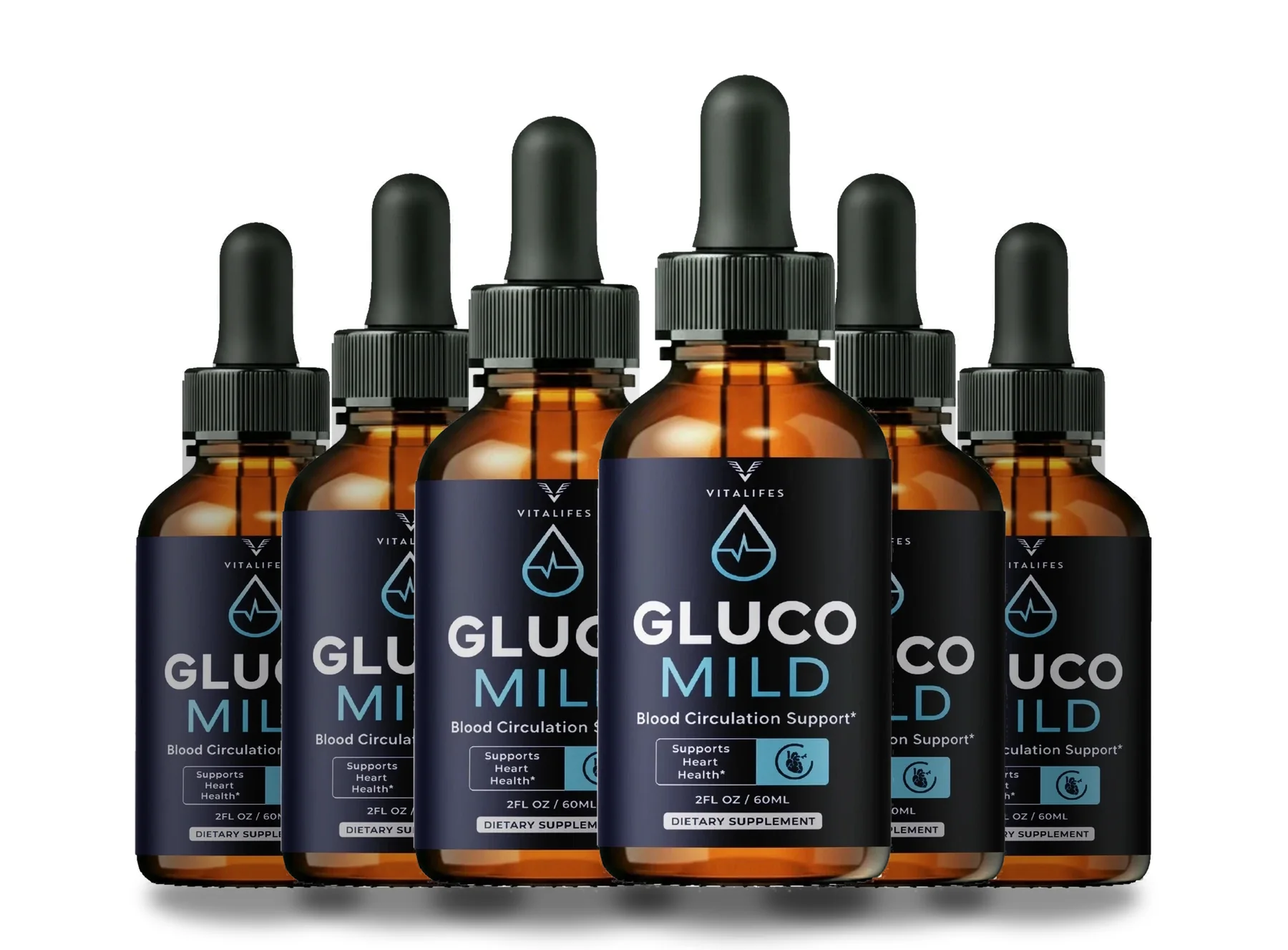
Gluco Mild Official Website › Side effects
Side effectsGluco Mild Side Effects and Interactions to Know
Most reported effects from the Gluco Mild plants are mild and mostly digestive.
Two interactions matter: hawthorn with digoxin, and grape seed with a prescribed blood thinner. Pregnancy is a firm exclusion because of motherwort's effect on uterine muscle. Ask your doctor if you take any prescription.
See also who Gluco Mild is for.
The safety record of seven named plants, the two interactions that need a conversation, and what to do if the bottle does not suit you.
What is on record for the Gluco Mild botanicals?
The plants carry their own safety literature, and it is reasonably large.
Seven species are named on the ingredient graphic, and five of them have been through controlled trials that counted and published their adverse events. That is where a safety picture for Gluco Mild has to start, because a plant carries its own record into whatever product it lands in.
Across that literature the pattern is consistent and dull: stomach upset, occasional nausea, headache, dizziness, and in a small number of people a rash. The 2020 Cochrane review of venoactive agents pooled trials covering more than ten thousand participants and found gastrointestinal complaints the commonest reason anyone stopped, at rates a few percentage points above placebo.
Two specific interactions sit above that background noise, and they are the reason this page exists rather than a general reassurance. Hawthorn has a measured effect on digoxin handling. Grape seed has anticoagulant and antiplatelet activity in the laboratory. Both are named below with the study behind them.
- Common and mild: stomach upset, nausea, headache, light-headedness, rash.
- Specific and worth raising: digoxin, warfarin and other prescribed blood thinners.
- Ruled out entirely: pregnancy, trying to conceive, nursing, and anyone under 18.
- Unknown quantity: the label gives no daily amount for any of the seven, so the published rates belong to the trials rather than to this dropper.
What each Gluco Mild botanical is known to do, one row at a time
Seven species, seven separate records, and they are not equally full.
| Botanical | Reported in the literature | What it means for you |
|---|---|---|
| Gotu kola (leaf) | Nausea and stomach upset at the doses used in the venous trials. Liver injury has been reported in isolated case reports over long unsupervised use. | Stop if you notice yellowing of the skin or eyes, or unusual tiredness with dark urine. |
| Chinese hawthorn (fruit) | Mild and infrequent in the pooled trials: dizziness, light-headedness, digestive complaints. A systematic review of adverse events found nothing severe attributable to it. | Raise it with the prescriber if you take digoxin or any prescribed heart medicine. |
| Horse chestnut (seed) | Itching, nausea, headache and calf spasm in the controlled trials. The raw seed is toxic; the standardised extract used in trials is processed to remove esculin. | Anyone with kidney or liver disease should treat this one as off the list. |
| Stone root (root) | No trial has ever counted them. The modern record on this plant is a single 1999 phytochemistry paper and two nineteenth-century clinical notes. | Nothing can be said about its safety at any amount, and this website does not pretend otherwise. |
| Motherwort (aerial parts) | Traditional use records drowsiness and, rarely, a rash after sun exposure. Its constituents act on uterine smooth muscle. | Not for anyone pregnant, trying to conceive or nursing. That is a hard exclusion. |
| Butcher's broom (root) | Stomach discomfort and nausea, at rates close to placebo in the twelve-week trial. | The best-studied preparation is a combination product, so its record is not purely Ruscus. |
| Grape seed (seed) | Well tolerated in trials running to sixteen weeks. Headache, dizziness and nausea appear at low rates. | Anticoagulant and antiplatelet activity in the laboratory. Say so before any surgery and before starting warfarin. |
Reported rates belong to the trials named in the sources below, which ran at stated daily amounts. This bottle prints none, so the rates cannot be transferred to it arithmetically.
Read the middle column as the plant's history rather than as a forecast. A trial that gave 900 mg of a standardised hawthorn extract every day for two years is a far larger exposure than two drops after dinner, and its adverse-event count reflects that.
The Gluco Mild interaction that matters most: hawthorn and digoxin
One study, one drug, and a short conversation that settles it.
A crossover study in healthy volunteers gave digoxin alone and then digoxin alongside a standardised hawthorn preparation for three weeks, and measured the serum concentration both ways. The pharmacokinetic parameters shifted. The authors read the shift as small enough to be clinically tolerable in that setting and still worth knowing about.
Digoxin is a narrow-therapeutic-index drug, which is the phrase that does the work here. The gap between a dose that helps and a dose that causes trouble is small, and anything that nudges the blood level of it is worth a conversation with whoever prescribed it. That conversation takes two minutes and it is the single most useful thing on this page.
Hawthorn also appears in the heart-failure literature as an addition to prescribed treatment rather than a replacement for it. The benefit-risk assessment of the standardised extract is explicit on that point, and so is this website.
Take the actual bottle, or a photograph of the ingredient graphic. Seven Latin names on a screen are far more useful to a prescriber than a brand name they have never heard, and the graphic is the only place all seven appear together.
The second named Gluco Mild interaction: grape seed and blood thinners
Bench evidence, a thin clinical record, and a drug class where that combination still earns a mention.
A laboratory study of polyphenolic grape seed extract demonstrated both anticoagulant and antiplatelet activity in human plasma, measured directly rather than inferred from structure. That is bench work rather than a clinical outcome, and it is still the kind of finding that belongs on a label conversation.
A systematic review of warfarin interactions looked across food, herbal and dietary supplement reports and found the evidence base thinner and more anecdotal than most people assume, with case reports carrying much of the weight. Thin evidence is not the same as no risk when the drug in question is one that is monitored by blood test precisely because its margin is narrow.
The practical version is short. If you are on warfarin, apixaban, clopidogrel or daily aspirin under instruction, mention grape seed extract by name at your next review and let the person monitoring you decide. If you have surgery or dental extraction scheduled, tell the surgeon what you are taking.
- Warfarin, and anything monitored by INR.
- Direct oral anticoagulants such as apixaban, rivaroxaban and edoxaban.
- Antiplatelet medicines including clopidogrel and prescribed daily aspirin.
- Any planned surgery, endoscopy or dental extraction inside the next fortnight.
Why Gluco Mild is ruled out in pregnancy, specifically
The reason is in the pharmacology, not in the small print.
Most supplement labels carry a pregnancy line as a general precaution. This one has a named reason, and stating it once by name is more useful than repeating a vague caution in every section.
Work on the alkaloids and flavonoid glycosides of Leonurus isolated constituents with opposite effects on uterine smooth muscle: some relaxing, some contracting. Motherwort's traditional European and Chinese use includes exactly that application, which is consistent with the pharmacology rather than a coincidence of folklore.
So the exclusion here is not defensive boilerplate. Anyone pregnant, trying to conceive or nursing should leave this bottle alone, and the reason is a specific tissue effect rather than an absence of data.
Honest dosage analysis: what the blank column means for Gluco Mild safety
No amount printed means no arithmetic, and that has consequences in both directions.
The comparison table on the ingredients page has the same entry in its right-hand column on all seven rows, and that shapes this page in two directions at once.
It cuts towards safety. A dropper delivering two drops after a meal is a small exposure by any reasonable estimate, far below the 180 mg, 900 mg and 200 to 400 mg daily amounts the trials used. Adverse events in those trials arose at exposures this bottle is unlikely to approach.
It also cuts against certainty. Without a figure there is no way to say how far below, and no way to model what happens if someone doubles the dropper because a month felt quiet. The honest position is that the exposure is probably small, that nobody outside the manufacturer can put a number on it, and that following the two-drop direction is what keeps the estimate in the range the reasoning above assumes.
Take what the bottle directs and no more. On a product with published amounts you can reason about a larger serving. On this one you cannot, so the printed direction is the only defensible ceiling.
What to do if Gluco Mild disagrees with you
Four steps about your body and one about your order, kept apart on purpose.
Stop for three days and see what settles
Most of what is reported across this plant group is digestive and it fades within a few days of stopping. Three clear days tell you more than a fortnight of wondering.
Try it again with more food, once
The direction says after a meal for a reason. Someone who took it on an empty stomach in a rush has not really tested the product yet, and a second attempt with a proper meal underneath it often settles the question.
Write down what happened and when
The day it started, what it felt like, what else changed that week. A note made on the day is worth more than a recollection a month later, and it is what any appointment will ask for first.
Get the rash, the yellowing or the swelling looked at
A rash that spreads, yellowing of the skin or eyes, or a calf that becomes swollen, hot and painful on one side are not supplement side effects to wait out. The last of those has an urgent explanation worth excluding the same day.
Call the order desk about the bottles, separately
Whether it suits you and whether you can return it are two different questions. The desk on +1 (302) 200-3480 handles the second, and the refund route sets out the order to do it in.
Who should not start Gluco Mild at all
Two columns, and the right-hand one is the more important of the two.
Gluco Mild suits this reader
- Adults over 18 with heavy, aching legs by the end of a standing day.
- People who already move, elevate and wear compression, and want to add something.
- Anyone who can give a new routine two to three months before judging it.
- People who read an ingredient list before buying, and will read this one.
Gluco Mild is the wrong purchase here
- Anyone pregnant, trying to conceive or nursing.
- Anyone under 18.
- Anyone taking digoxin, warfarin or another prescribed blood thinner, until it has been raised at a review.
- Anyone with kidney or liver disease, on account of the horse chestnut row.
- Anyone whose real question is blood sugar. Nothing on this label addresses it.
- Anyone with a hot, swollen, painful calf on one side, which needs assessment now rather than a supplement.
Questions about Gluco Mild safety
Is Gluco Mild safe to take every day?
The directions graphic asks for exactly that: two drops daily, consistently. The trials behind these plants ran daily for eight weeks to two years, so daily use is the pattern the evidence describes. Whether it is safe for you depends on the interaction list above rather than on the frequency.
Can I take Gluco Mild with a statin?
No interaction between any of these seven and a statin is described in the literature cited on this page. Mention it at your next review anyway if you take several prescribed medicines, because the person holding your full list can see things a website cannot.
Does Gluco Mild thin the blood?
Grape seed extract shows anticoagulant and antiplatelet activity in laboratory work, at concentrations produced in a test tube rather than in a person taking two drops. Treat it as a reason to disclose the bottle before surgery and before starting an anticoagulant, not as evidence the drops do the same thing.
What happens if I take more than two drops of Gluco Mild?
You leave the only part of the product anyone can reason about. The bottle prints no amount per drop, so a larger serving is an unmeasured exposure rather than a stronger one. Stay on the printed direction.
Are there Gluco Mild side effects the seller has not published?
The seller publishes no adverse-event data at all, and neither does any distributor of a product like this. Everything on this page is drawn from trials of the named plants, which is the only public record that exists for them.
Can I take Gluco Mild alongside another circulation supplement?
Doubling up on horse chestnut, butcher's broom or grape seed from two bottles at once is the commonest way people quietly quadruple an exposure nobody has measured. Read both ingredient lists and pick one.
Sources behind the Gluco Mild safety record
Every trial, review and interaction study named above, in the order each one first appears.
- Martinez-Zapata MJ, Vernooij RW, Simancas-Racines D, et al. Phlebotonics for venous insufficiency. Cochrane Database Syst Rev. 2020;11(11):CD003229. PMID 33141449. https://pubmed.ncbi.nlm.nih.gov/33141449/
- Tankanow R, Tamer HR, Streetman DS, et al. Interaction study between digoxin and a preparation of hawthorn (Crataegus oxyacantha). J Clin Pharmacol. 2003;43(6):637-42. PMID 12817526. https://pubmed.ncbi.nlm.nih.gov/12817526/
- Daniele C, Mazzanti G, Pittler MH, et al. Adverse-event profile of Crataegus spp.: a systematic review. Drug Saf. 2006;29(6):523-35. PMID 16752934. https://pubmed.ncbi.nlm.nih.gov/16752934/
- Holubarsch CJF, Colucci WS, Eha J. Benefit-Risk Assessment of Crataegus Extract WS 1442: An Evidence-Based Review. Am J Cardiovasc Drugs. 2018;18(1):25-36. PMID 29080984. https://pubmed.ncbi.nlm.nih.gov/29080984/
- Bijak M, Sut A, Kosiorek A, et al. Dual Anticoagulant/Antiplatelet Activity of Polyphenolic Grape Seeds Extract. Nutrients. 2019;11(1):93. PMID 30621248. https://pubmed.ncbi.nlm.nih.gov/30621248/
- Tan CSS, Lee SWH. Warfarin and food, herbal or dietary supplement interactions: A systematic review. Br J Clin Pharmacol. 2021;87(2):352-374. PMID 32478963. https://pubmed.ncbi.nlm.nih.gov/32478963/
- Liu J, Peng C, Zhou QM, et al. Alkaloids and flavonoid glycosides from the aerial parts of Leonurus japonicus and their opposite effects on uterine smooth muscle. Phytochemistry. 2018;145:128-136. PMID 29127939. https://pubmed.ncbi.nlm.nih.gov/29127939/
- Fierascu RC, Fierascu I, Ortan A, et al. Leonurus cardiaca L. as a Source of Bioactive Compounds: An Update of the European Medicines Agency Assessment Report (2010). Biomed Res Int. 2019;2019:4303215. PMID 31119169. https://pubmed.ncbi.nlm.nih.gov/31119169/
- Pittler MH, Ernst E. Horse chestnut seed extract for chronic venous insufficiency. Cochrane Database Syst Rev. 2012;11(11):CD003230. PMID 23152216. https://pubmed.ncbi.nlm.nih.gov/23152216/
- Savarino P, Colson E, Andre J, et al. Horse Chestnut Saponins-Escins, Isoescins, Transescins, and Desacylescins. Molecules. 2023;28(5):2087. PMID 36903330. https://pubmed.ncbi.nlm.nih.gov/36903330/
- Torbati FA, Ramezani M, Dehghan R, et al. Ethnobotany, Phytochemistry and Pharmacological Features of Centella asiatica: A Comprehensive Review. Adv Exp Med Biol. 2021;1308:451-499. PMID 33861456. https://pubmed.ncbi.nlm.nih.gov/33861456/
- Yamakoshi J, Saito M, Kataoka S, et al. Safety evaluation of proanthocyanidin-rich extract from grape seeds. Food Chem Toxicol. 2002;40(5):599-607. PMID 11955665. https://pubmed.ncbi.nlm.nih.gov/11955665/
- Vanscheidt W, Jost V, Wolna P, et al. Efficacy and safety of a Butcher's broom preparation (Ruscus aculeatus L. extract) compared to placebo in patients suffering from chronic venous insufficiency. Arzneimittelforschung. 2002;52(4):243-50. PMID 12040966. https://pubmed.ncbi.nlm.nih.gov/12040966/
- Stevens JF, Ivancic M, Deinzer ML, et al. A novel 2-hydroxyflavanone from collinsonia canadensis. J Nat Prod. 1999;62(2):392-4. PMID 10075799. https://pubmed.ncbi.nlm.nih.gov/10075799/
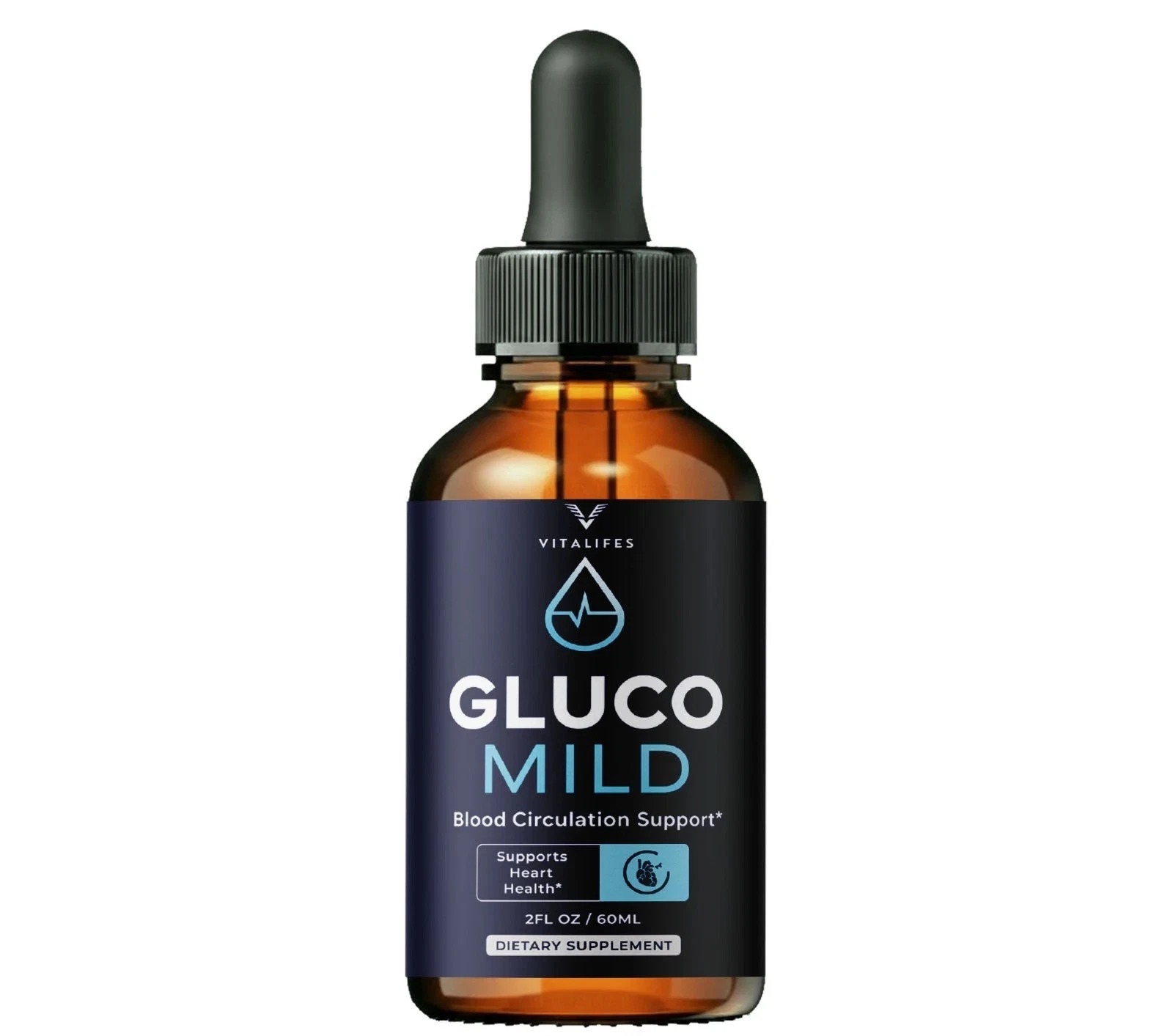
Order Gluco Mild with the interaction list already read
Seven named botanicals, two drops daily after a meal, and two conversations worth having first if you take a prescribed heart medicine or a blood thinner.
Seven named botanicals · 2 fl oz (60 ml) · price and return window shown at checkout
Order Gluco Mild On The Official WebsiteTwo drops daily after a meal · 2 fl oz (60 ml) a bottle · lot GLU-26/TH-7250