Gluco Mild Official Website › Choosing A Formula
Choosing A FormulaHow To Choose A Circulation Supplement
Read the label in six passes rather than all at once, and each pass takes about thirty seconds.
The front claim, the plant parts, the amounts, the standardisation, the serving arithmetic and the interactions the list implies. Six passes answer more than an hour of reading reviews will, because they read the one document the seller is accountable for.
A method rather than a ranking, ending with this website's own bottle run through it.
Six passes over a label, in the order that saves time
Six questions, asked one at a time.
A supplement label is a dense document read badly. Most people read it once, top to bottom, and come away with an impression rather than an answer.
Six short passes work better, because each one asks a single question and most labels fail one of the first three. A label that fails pass three does not need passes four to six, which is where the time saving comes from.
The method works on any bottle in this category and on most bottles outside it. It needs no expertise, no app and no comparison site, and it can be done standing in front of a shelf.
- Pass one — the front claim, and what kind of claim it is.
- Pass two — the ingredient list, and which part of each plant is in it.
- Pass three — the amounts, and whether any are printed at all.
- Pass four — standardisation, the number beside the number.
- Pass five — the serving, the form, and the arithmetic they imply.
- Pass six — the interactions the ingredient list implies.
Pass one: the front claim, and what kind of claim it is
Three kinds of line on the front of a bottle, and how to tell them apart.
Read the largest line on the front and decide which of three things it is.
A structure-and-function claim describes an effect on the body's ordinary workings: supports healthy circulation, supports heart health. It is the only kind a supplement may make and it has not been assessed by anyone.
A disease claim names a diagnosed condition. On a supplement label this is not allowed, and a product making one is either mislabelled or being sold as something it is not.
A brand name is neither. This is the one people miss, and it is worth being alert to: a name that sounds like a mechanism is a name, not a claim, and a product's own label is the place to check what it actually says it does.
Thirty seconds, and it tells you what the seller has committed to in writing.
Pass two: the ingredient list, and the plant part
Two questions of the ingredient list, and why the second is not pedantry.
Move to the ingredient list and read for two things: how many names there are, and whether each one says which part of the plant was used.
Plant part is not a detail. Root, leaf, seed and fruit of the same species carry different compounds and have different literatures behind them, and a trial run on one part establishes nothing about another. In this category the seed of the horse chestnut is the part with the trials; the leaf is a different subject.
The count matters in a different way. A long list on a small serving means very little of anything, which is arithmetic rather than opinion. A short list is not automatically better, but it is easier to check.
A list with no plant parts named is not disqualifying. It does mean you cannot line the product up against the research, and pass four will usually confirm why.
Pass three: the amounts, and whether any are printed
Three things an amount column can say, and what each one costs you.
Look for a Supplement Facts panel and read down the amount column.
Three things can be true. Every active has a printed amount, which is the best case and less common than it should be. Some have amounts and the rest sit inside a proprietary blend, which tells you the total and not the split. Or no amount is printed for anything, which is where a surprising number of botanical liquids land.
A proprietary blend is a legal, ordinary and deeply unhelpful arrangement. It lets a manufacturer protect a formula and it lets a reader check nothing at all. Where a blend total is printed, the useful move is to compare that single number against the trial dose of the first ingredient alone; it is often smaller.
Where no amount is printed for anything, the comparison you would want to make cannot be made in principle. That is worth knowing before rather than after a purchase, and it is the point at which many labels can be put down.
Pass four: standardisation, the number beside the number
The one word that decides whether a milligram figure can be compared with anything.
If amounts are printed, ask what each one is a weight of.
The trials in this category all used standardised extracts: a stated constituent at a stated percentage. Horse chestnut standardised to aescin. Gotu kola to the total triterpenic fraction. Grape seed to proanthocyanidins. Hawthorn as one named preparation.
So a label reading “300 mg horse chestnut extract, standardised to 20% aescin” is comparable with the literature and a label reading “300 mg horse chestnut” is not. Same weight, very different documents.
On a liquid, look for an extraction ratio instead — a figure such as 1:4 telling you how much plant material a volume represents. Without it, a volume of tincture cannot be converted into anything, and a drop is a variable quantity in any case: its size depends on the dropper, the viscosity and the temperature.
Pass five: the serving, the form and the arithmetic
Two sums, and the one that tells you how many bottles a fair trial takes.
Read the directions and work out what a day actually costs you in effort.
One serving a day is easier to keep up than three, and adherence is not a trivial consideration in a category where the trials ran for twelve weeks. Three-times-daily dosing is how several of the published trials were run, which is a genuine mismatch between what was tested and what most retail labels ask of a buyer.
Then multiply. Servings per container against servings per day gives the days a bottle lasts, and that number against the trial durations in the category guide tells you how many bottles an honest trial of the product would take. It is usually more than one.
Form matters here too. A capsule delivers a weighed fill. A liquid delivers a volume of a solution whose concentration is only knowable from an extraction ratio. Neither is better; they are different kinds of document.
Pass six: the interactions the list implies
Three names worth spotting, and why the pass belongs before the purchase.
Finally, read the ingredient list for names that interact with common medicines, whether or not the label mentions them.
In this category three come up repeatedly. Hawthorn has a measured interaction with digoxin. Grape seed extract has anticoagulant and antiplatelet activity in the laboratory, which matters to anyone on warfarin — the systematic review of warfarin and supplement interactions is where that question is properly handled. Motherwort's constituents act on uterine smooth muscle, which rules a product out in pregnancy.
A label that names these itself is doing its job. A label that does not is not necessarily hiding anything — cautions are often abbreviated for space — but it does mean the reading has to be done by you.
This is the pass to do before buying rather than after, and it is the one worth mentioning to whoever wrote your prescription.
Running Gluco Mild through the six passes
Six passes, applied to the bottle this website sells.
| Pass | What Gluco Mild shows | Verdict |
|---|---|---|
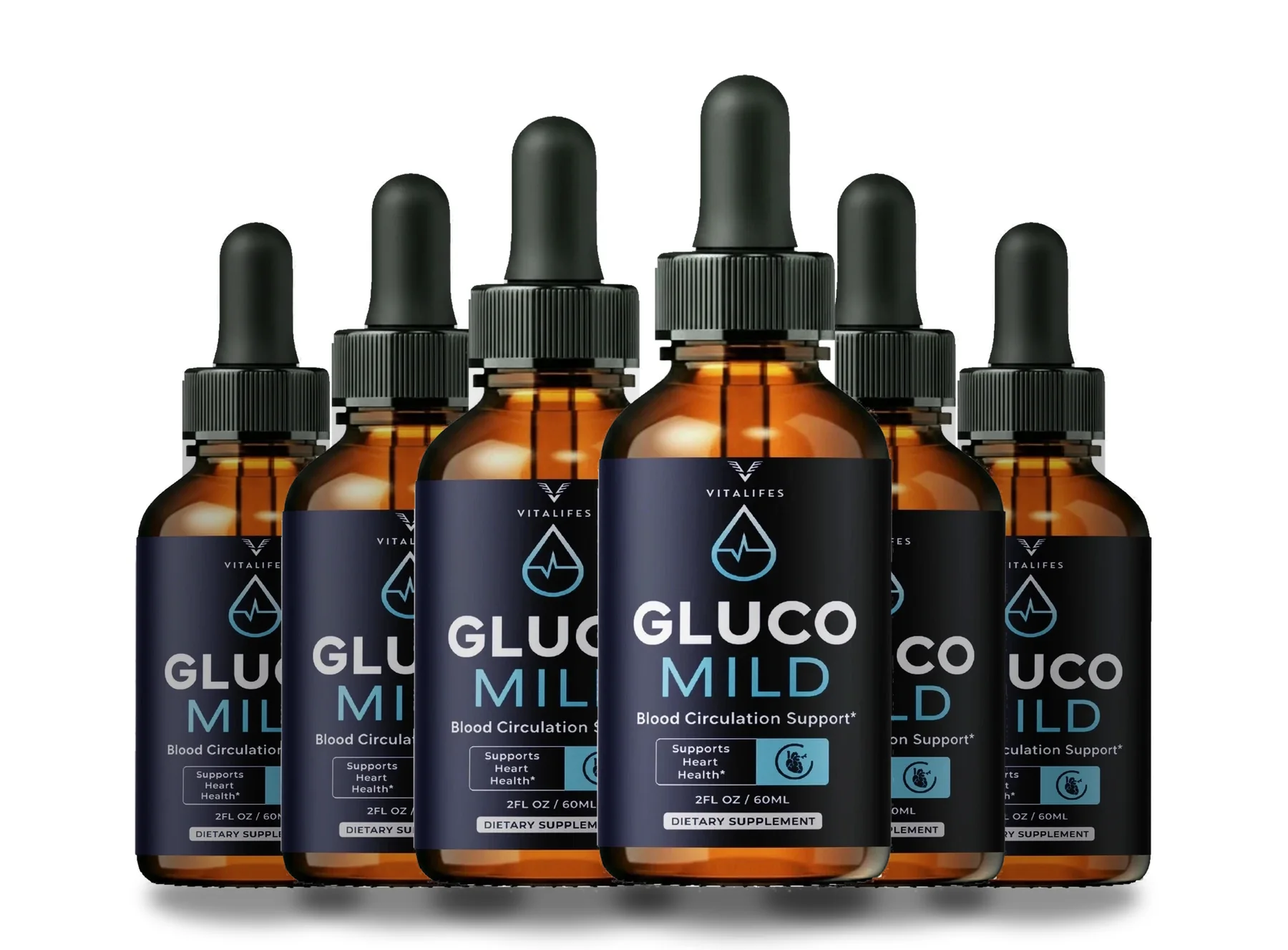
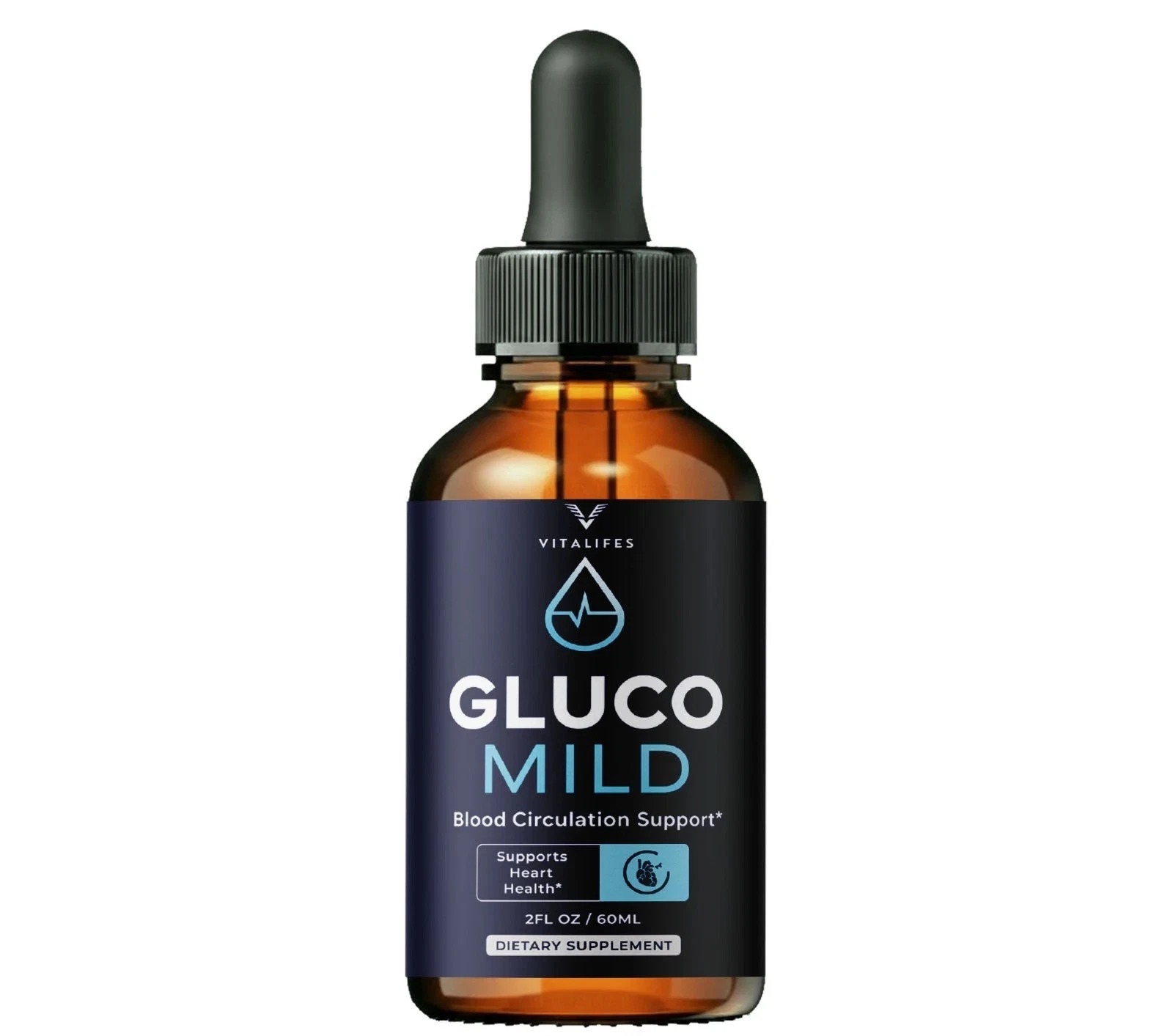
| One: the front claim | “Blood Circulation Support” and “Supports Heart Health”, both structure-and-function claims. The name is a brand name and mentions nothing the label claims. | Passes. The claims are modest and the name is correctly treated as a name. |
| Two: the ingredient list | 7 botanicals named on a separate graphic, five of them with the plant part given. | Passes, with a note. The names are published and most carry a part. |
| Three: the amounts | No Supplement Facts panel anywhere, and no amount printed for any of the seven. | Fails. The comparison a buyer would want cannot be made. |
| Four: standardisation | None stated, and no extraction ratio for the liquid. | Fails, and pass three already implied it. |
| Five: the serving | Two drops daily after a meal, from a 2 fl oz bottle. No servings-per-container figure is printed. | Mixed. Once daily is easy to keep up; the arithmetic cannot be closed. |
| Six: the interactions | Hawthorn, grape seed and motherwort are all on the list, and all three are named on this website with their records. | Passes as a reading exercise. The list implies three conversations worth having. |
Scored by the same six passes set out above, on the same evidence any reader can check from the label artwork.
Two clear failures, both on the same underlying point, and they are the reason this website prints a trial dose beside every botanical rather than a comparison it cannot make. The ingredients page carries the full seven-row version.
Two clear passes are worth recording as well. The claim line is restrained for this category, and the ingredient list is published in full with most plant parts named, which a good deal of competing packaging does not manage.
Sources behind the six passes
The trial doses that make pass four worth doing, and the three interaction records behind pass six.
- Pittler MH, Ernst E. Horse chestnut seed extract for chronic venous insufficiency. Cochrane Database Syst Rev. 2012;11(11):CD003230. PMID 23152216. https://pubmed.ncbi.nlm.nih.gov/23152216/
- Dickson S, Gallagher J, McIntyre L, et al. An open study to assess the safety and efficacy of Aesculus hippocastanum tablets (Aesculaforce 50mg) in the treatment of chronic venous insufficiency. J Herb Pharmacother. 2004;4(2):19-32. PMID 15364642. https://pubmed.ncbi.nlm.nih.gov/15364642/
- De Sanctis MT, Belcaro G, Incandela L, et al. Treatment of edema and increased capillary filtration in venous hypertension with total triterpenic fraction of Centella asiatica: a clinical, prospective, placebo-controlled, randomized, dose-ranging trial. Angiology. 2001;52 Suppl 2:S55-9. PMID 11666125. https://pubmed.ncbi.nlm.nih.gov/11666125/
- Odai T, Terauchi M, Kato K, et al. Effects of Grape Seed Proanthocyanidin Extract on Vascular Endothelial Function in Participants with Prehypertension: A Randomized, Double-Blind, Placebo-Controlled Study. Nutrients. 2019;11(12):2844. PMID 31757033. https://pubmed.ncbi.nlm.nih.gov/31757033/
- Tankanow R, Tamer HR, Streetman DS, et al. Interaction study between digoxin and a preparation of hawthorn (Crataegus oxyacantha). J Clin Pharmacol. 2003;43(6):637-42. PMID 12817526. https://pubmed.ncbi.nlm.nih.gov/12817526/
- Bijak M, Sut A, Kosiorek A, et al. Dual Anticoagulant/Antiplatelet Activity of Polyphenolic Grape Seeds Extract. Nutrients. 2019;11(1):93. PMID 30621248. https://pubmed.ncbi.nlm.nih.gov/30621248/
- Liu J, Peng C, Zhou QM, et al. Alkaloids and flavonoid glycosides from the aerial parts of Leonurus japonicus and their opposite effects on uterine smooth muscle. Phytochemistry. 2018;145:128-136. PMID 29127939. https://pubmed.ncbi.nlm.nih.gov/29127939/
- Tan CSS, Lee SWH. Warfarin and food, herbal or dietary supplement interactions: A systematic review. Br J Clin Pharmacol. 2021;87(2):352-374. PMID 32478963. https://pubmed.ncbi.nlm.nih.gov/32478963/
- Martinez-Zapata MJ, Vernooij RW, Simancas-Racines D, et al. Phlebotonics for venous insufficiency. Cochrane Database Syst Rev. 2020;11(11):CD003229. PMID 33141449. https://pubmed.ncbi.nlm.nih.gov/33141449/
Test Gluco Mild the way the six passes suggest
Two passes it clears comfortably, two it does not, and a routine of two drops a day that is easier to keep up than most of the trials were. Read the ingredients page before the checkout.
Seven named botanicals · 2 fl oz (60 ml) · price and return window shown at checkout
Order Gluco Mild On The Official WebsiteTwo drops daily after a meal · 2 fl oz (60 ml) a bottle · lot GLU-26/TH-7250