Gluco Mild Official Website › Circulation Supplement Guide
Circulation Supplement GuideThe Circulation Supplement Guide
Venoactive supplements are plant extracts taken for heavy, aching, swelling legs, and the pooled evidence for them is real but modest.
Four plants carry controlled human trials. Several familiar names carry none. The doses that produced the published results are far larger than most retail labels state, and the measurements were taken at eight to twelve weeks rather than in week one.
What the category is, what it supports, and where a label stops being checkable.
What a venoactive supplement is trying to do
One mechanism, described plainly, and the boundary at the end of it.
The symptoms that bring people to this shelf are familiar: legs that feel heavy by the afternoon, ankles that mark when a sock comes off, a dull ache after a day standing still. In the clinical literature these sit under chronic venous disease, which is a spectrum running from tired legs at one end to skin changes and ulceration at the far one.
The mechanism review describes the underlying problem as a failure of the valves and the vessel wall to return blood upward against gravity. Pressure rises in the small vessels, fluid moves out into the tissue, and the inflammatory response that follows is what produces the ache and the swelling.
A venoactive drug — a phlebotonic — is a compound proposed to act on that chain: to raise the tone of the vein wall, to reduce how much fluid leaks from the capillaries, or to damp the inflammation once it has started. Several are prescription medicines in Europe. Most of what reaches a supplement shelf in the United States is a plant extract with the same proposed mechanism and a much weaker regulatory status.
That is the category. It is not a treatment for varicose veins, it does not reverse valve damage, and nothing in it is a substitute for being looked at if a leg has changed colour, broken down or swollen on one side only.
What the pooled evidence shows across the whole category
One systematic review, read for both of the things it says.
The 2020 Cochrane review of phlebotonics is the closest thing this field has to a settled answer. It pooled the randomised evidence across the whole class and concluded that phlebotonics probably reduce oedema slightly compared with placebo, with low-certainty evidence for several symptom measures and a modest increase in side effects.
Read that sentence carefully, because both halves matter. There is a measured effect on swelling, which is more than can be said for a great many supplement categories. It is described as slight, and the certainty attached to most of the symptom outcomes is low.
A 2024 update on herbal drugs in venous disease reaches a similar place from the plant end: a real pharmacology, a real but variable clinical record, and a persistent problem with how little two products carrying the same plant name have in common.
The honest summary is that this is a category where the best case is a modest improvement in swelling and comfort over three months, in people who also do the things in the last section of this guide. Anybody promising more than that is selling past the evidence.
Ankle circumference, leg volume, and symptom scores for heaviness, aching and cramp. Not vein appearance, not valve function, and not anything visible in a week.
Sorting the common ingredients into three tiers
Three tiers, sorted by what the published record contains rather than by popularity.
| Tier | Plants | What the record actually contains |
|---|---|---|
| Controlled human trials, with a stated dose | Horse chestnut, butcher's broom, gotu kola, grape seed | Randomised placebo-controlled work at a named daily amount, over eight to sixteen weeks, with ankle or leg measurements as endpoints. Four of these appear by name in the pooled Cochrane review. |
| Human trials, in a different indication | Hawthorn | A substantial cardiac literature, including a two-year trial in diagnosed heart failure alongside prescribed treatment. That is heart evidence. It is not leg-vein evidence and the two do not transfer. |
| Traditional use, with no human trial | Stone root, motherwort | Cell and animal pharmacology, historical case notes, and no randomised study in people at any dose. A search for stone root returns four records, two of them from the 1880s. |
Three tiers, and the tier a plant sits in is a statement about the published record rather than a judgement about the plant.
The first tier is where the category's reputation comes from. The Cochrane review of horse chestnut seed extract found improvements in leg pain, oedema and itching against placebo. The pooled analysis of butcher’s broom covered a combination product used across twenty trials. The gotu kola dose-ranging trial compared two daily amounts directly and found the larger one worked better, which is a rarer and more useful finding than another placebo comparison.
The second tier is the one that causes the most confusion on a shelf, because hawthorn has genuinely impressive trials attached to it and none of them measured a leg.
The third tier is not a criticism. A plant with no trial is a plant nobody has run a trial on, which is the ordinary condition of most of the botanical world. What it means is that a label carrying one has no dose to be compared against and no result to inherit.
Why a dose without a standardisation figure is half a number
One habit, and the three numbers that make a label checkable.
The single most useful habit in this category is to read a milligram figure and then ask what it is a milligram of.
Every trial in the first tier used a standardised extract. Horse chestnut tablets standardised to a stated aescin content. Gotu kola standardised to its total triterpenic fraction. Hawthorn as WS 1442, a specific preparation with a specific procyanidin and flavonoid content. Grape seed as a proanthocyanidin extract at a stated concentration.
Standardisation is what makes the milligram mean something. Two hundred milligrams of a raw milled root and two hundred milligrams of an extract standardised to five per cent of an active constituent are the same weight of two very different things, and only one of them resembles what was tested.
A label that names a plant, states a weight and says nothing about standardisation has given you half a number. It is not necessarily a bad product; it is a product whose dose cannot be compared with the literature, which is a different problem and a permanent one.
On a liquid the gap widens. A tincture needs an extraction ratio before a volume can be converted into plant material at all, and a drop is not a unit of measurement: its size depends on the dropper bore, the viscosity and the temperature of the room.
- The weight of extract per serving.
- The standardisation — which constituent, at what percentage.
- For a liquid, the extraction ratio and the solvent.
How long the trials ran before anything was measured
Five rows, and the right-hand column is the one to read first.
| Plant | Daily amount the trials used | How long they ran |
|---|---|---|
| Horse chestnut | 50 mg of standardised seed extract twice daily | Eight to twelve weeks |
| Butcher's broom | 150 mg of root extract twice daily, with hesperidin and vitamin C | Twelve weeks |
| Gotu kola | 180 mg/day of the total triterpenic fraction, in three divided doses | Four weeks to twelve months |
| Grape seed | 200–400 mg/day of proanthocyanidin extract | Twelve to sixteen weeks |
| Hawthorn | 900 mg/day of the standardised extract WS 1442 | Twenty-four months, in heart failure rather than venous disease |
Read off the trials themselves rather than from secondary summaries. The right-hand column is the one most often left out of a marketing claim.
Nothing in that table measured anything in the first week, and most of it measured nothing before week eight. That is the single most practical fact in this guide.
It follows that a supplement judged after seven days has not been judged. A first week tells you whether you can tolerate the taste, whether the routine sticks and whether anything disagrees with you, all of which are worth knowing and none of which is the question you bought it to answer.
It also follows that a pack size is a decision about evidence rather than about money. A single bottle that runs out at week four ends before the shortest trial window closes, which means it can only answer the tolerance question.
The four things that move these symptoms more than any capsule
Four interventions, ranked by the evidence behind them rather than by convenience.
Compression
The 2023 American vascular-society guidelines and the European guidelines both place graduated compression at the front of conservative management. It is the intervention with the strongest evidence in this whole area, and it is available without a prescription.
Movement, specifically the calf
The calf muscle is the pump that returns blood from the leg. Standing still is worse for these symptoms than either walking or sitting, which is why the trade most associated with them is the one that stands in one place all day.
Elevation, for a short period that actually happens
Twenty minutes with the legs above the hips does more for an afternoon's swelling than any oral preparation is claimed to. The difficulty is arranging it, not believing it.
Weight, where it applies
Both guideline sets name it, and both name it without much enthusiasm because it is the hardest of the four. It is listed here for completeness rather than as advice.
Those four are why individual results vary so widely in this category, and why a supplement started in spring is so often credited with a summer of walking more. A person who begins a bottle and also begins wearing compression stockings has changed two things at once and can attribute the result to either.
None of this makes a venoactive supplement pointless. It makes it the smaller of two levers, and a guide that did not say so would be worth less than the paper it is not printed on.
What a circulation supplement is allowed to say
Two kinds of claim, and what neither of them has been through.
A dietary supplement in the United States may make a structure-and-function claim: a statement about an effect on the ordinary workings of the body. “Supports healthy circulation” is that kind of claim.
It may not make a disease claim. Naming a diagnosed condition — venous insufficiency, varicose veins, oedema as a diagnosis — turns the product into an unapproved drug, which is why label copy in this category is written in the careful register it is.
None of these claims is reviewed before the product goes on sale. The seller is responsible for substantiating it and the agency acts afterwards. That is why the required statement appears on every label and at the foot of every page on this website.
What this means for a reader is simple. The claim on the front of a bottle tells you what the seller decided to write. It is not a finding, it has not been assessed, and the useful information is further back, on the ingredient list and in whatever amounts are printed beside it.
Where this guide runs out
Three boundaries on what has been written above.
Three limits, stated here rather than left for a reader to discover.
This guide covers oral plant extracts sold as supplements. It does not cover prescription venoactive drugs, sclerotherapy, ablation or surgery, all of which are real options with their own evidence and belong in a consultation rather than on a retail website.
It describes the category, not any particular bottle. Whether a specific product resembles the preparations in the trials depends on its extract, its standardisation and its dose, and most labels do not publish enough to tell.
And it is published by a desk that sells one of these products. That is disclosed on the about page and the defence against it is the citation list below: every claim in this guide links to a record you can open and read without taking this desk's word for anything.
Every source cited in this guide
Seventeen records: the pooled reviews, the individual trials that establish a daily amount, the two guideline sets, and the two entries that record an absence.
- Martinez-Zapata MJ, Vernooij RW, Simancas-Racines D, et al. Phlebotonics for venous insufficiency. Cochrane Database Syst Rev. 2020;11(11):CD003229. PMID 33141449. https://pubmed.ncbi.nlm.nih.gov/33141449/
- Bencsik T, Balazs VL, Farkas A, et al. Herbal drugs in chronic venous disease treatment: An update. Fitoterapia. 2024;179:106256. PMID 39419127. https://pubmed.ncbi.nlm.nih.gov/39419127/
- Mansilha A, Sousa J. Pathophysiological Mechanisms of Chronic Venous Disease and Implications for Venoactive Drug Therapy. Int J Mol Sci. 2018;19(6):1669. PMID 29874834. https://pubmed.ncbi.nlm.nih.gov/29874834/
- Pittler MH, Ernst E. Horse chestnut seed extract for chronic venous insufficiency. Cochrane Database Syst Rev. 2012;11(11):CD003230. PMID 23152216. https://pubmed.ncbi.nlm.nih.gov/23152216/
- Dickson S, Gallagher J, McIntyre L, et al. An open study to assess the safety and efficacy of Aesculus hippocastanum tablets (Aesculaforce 50mg) in the treatment of chronic venous insufficiency. J Herb Pharmacother. 2004;4(2):19-32. PMID 15364642. https://pubmed.ncbi.nlm.nih.gov/15364642/
- Boyle P, Diehm C, Robertson C. Meta-analysis of clinical trials of Cyclo 3 Fort in the treatment of chronic venous insufficiency. Int Angiol. 2003;22(3):250-62. PMID 14612852. https://pubmed.ncbi.nlm.nih.gov/14612852/
- Vanscheidt W, Jost V, Wolna P, et al. Efficacy and safety of a Butcher's broom preparation (Ruscus aculeatus L. extract) compared to placebo in patients suffering from chronic venous insufficiency. Arzneimittelforschung. 2002;52(4):243-50. PMID 12040966. https://pubmed.ncbi.nlm.nih.gov/12040966/
- De Sanctis MT, Belcaro G, Incandela L, et al. Treatment of edema and increased capillary filtration in venous hypertension with total triterpenic fraction of Centella asiatica: a clinical, prospective, placebo-controlled, randomized, dose-ranging trial. Angiology. 2001;52 Suppl 2:S55-9. PMID 11666125. https://pubmed.ncbi.nlm.nih.gov/11666125/
- Incandela L, Belcaro G, Cesarone MR, et al. Treatment of diabetic microangiopathy and edema with total triterpenic fraction of Centella asiatica: a prospective, placebo-controlled randomized study. Angiology. 2001;52 Suppl 2:S27-31. PMID 11666119. https://pubmed.ncbi.nlm.nih.gov/11666119/
- Zhang H, Liu S, Li L, et al. The impact of grape seed extract treatment on blood pressure changes: A meta-analysis of 16 randomized controlled trials. Medicine (Baltimore). 2016;95(33):e4247. PMID 27537554. https://pubmed.ncbi.nlm.nih.gov/27537554/
- Odai T, Terauchi M, Kato K, et al. Effects of Grape Seed Proanthocyanidin Extract on Vascular Endothelial Function in Participants with Prehypertension: A Randomized, Double-Blind, Placebo-Controlled Study. Nutrients. 2019;11(12):2844. PMID 31757033. https://pubmed.ncbi.nlm.nih.gov/31757033/
- Holubarsch CJ, Colucci WS, Meinertz T, et al. The efficacy and safety of Crataegus extract WS 1442 in patients with heart failure: the SPICE trial. Eur J Heart Fail. 2008;10(12):1255-63. PMID 19019730. https://pubmed.ncbi.nlm.nih.gov/19019730/
- Pittler MH, Schmidt K, Ernst E. Hawthorn extract for treating chronic heart failure: meta-analysis of randomized trials. Am J Med. 2003;114(8):665-74. PMID 12798455. https://pubmed.ncbi.nlm.nih.gov/12798455/
- Stevens JF, Ivancic M, Deinzer ML, et al. A novel 2-hydroxyflavanone from collinsonia canadensis. J Nat Prod. 1999;62(2):392-4. PMID 10075799. https://pubmed.ncbi.nlm.nih.gov/10075799/
- Fierascu RC, Fierascu I, Ortan A, et al. Leonurus cardiaca L. as a Source of Bioactive Compounds: An Update of the European Medicines Agency Assessment Report (2010). Biomed Res Int. 2019;2019:4303215. PMID 31119169. https://pubmed.ncbi.nlm.nih.gov/31119169/
- Gloviczki P, Lawrence PF, Wasan SM, et al. The 2023 Society for Vascular Surgery, American Venous Forum, and American Vein and Lymphatic Society clinical practice guidelines for the management of varicose veins of the lower extremities. Part II. J Vasc Surg Venous Lymphat Disord. 2024;12(1):101670. PMID 37652254. https://pubmed.ncbi.nlm.nih.gov/37652254/
- De Maeseneer MG, Kakkos SK, Aherne T, et al. Editor's Choice - European Society for Vascular Surgery (ESVS) 2022 Clinical Practice Guidelines on the Management of Chronic Venous Disease of the Lower Limbs. Eur J Vasc Endovasc Surg. 2022;63(2):184-267. PMID 35027279. https://pubmed.ncbi.nlm.nih.gov/35027279/
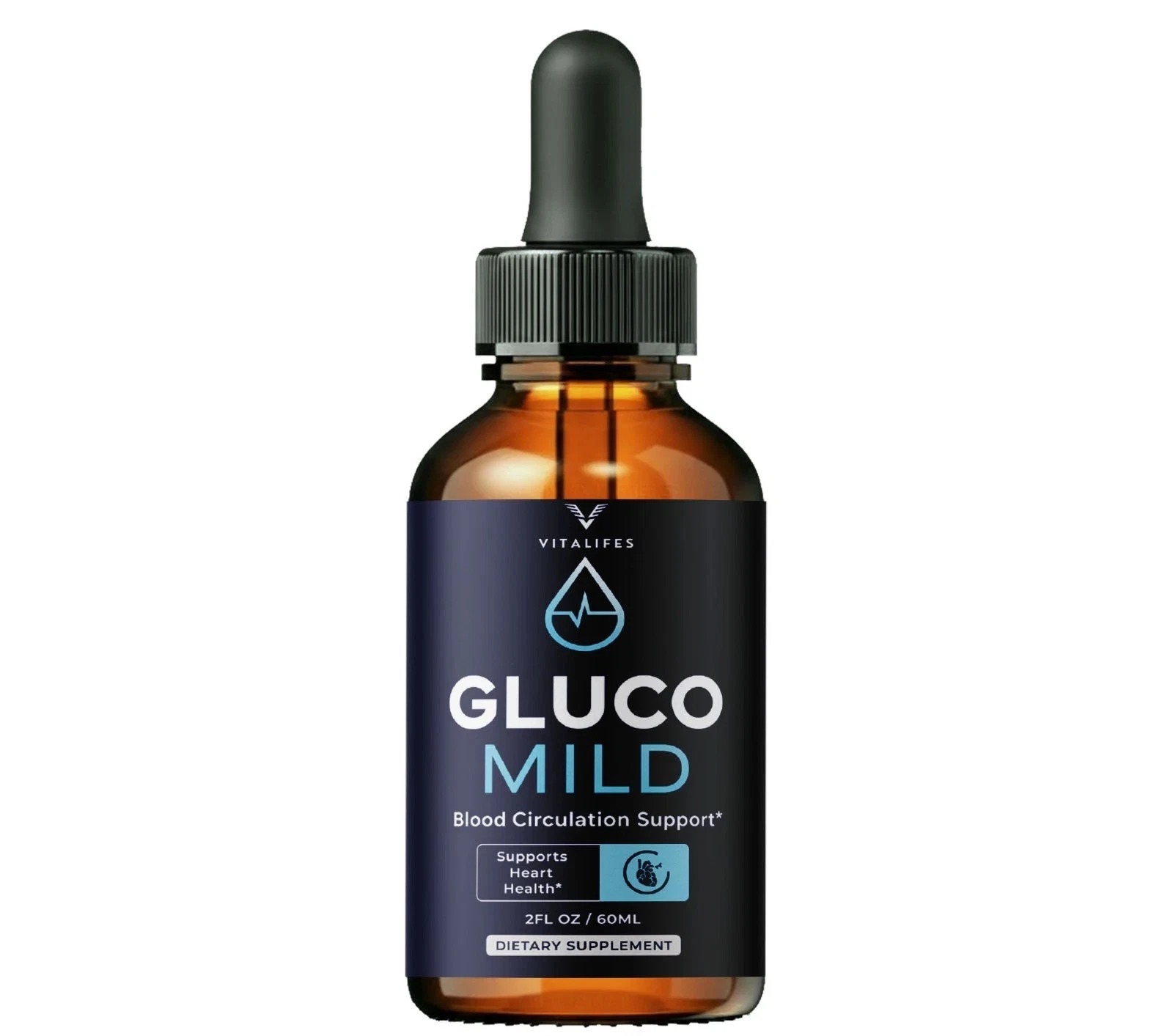
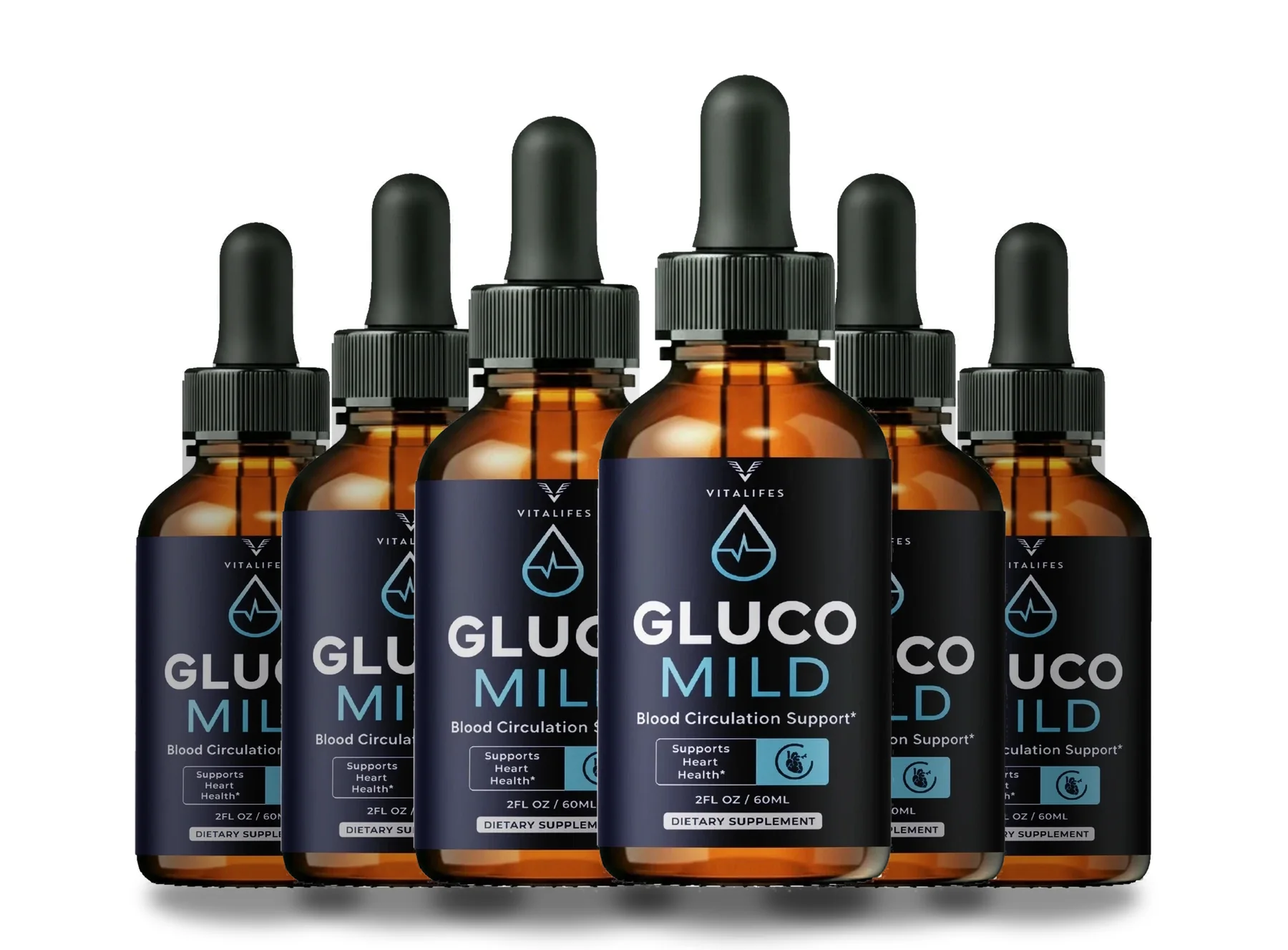
See how Gluco Mild reads against the guide above
Seven named botanicals across all three tiers, a liquid with no extraction ratio, and no amount printed for anything. The ingredients page sets each name beside the dose its trials used.
Seven named botanicals · 2 fl oz (60 ml) · price and return window shown at checkout
Order Gluco Mild On The Official WebsiteTwo drops daily after a meal · 2 fl oz (60 ml) a bottle · lot GLU-26/TH-7250