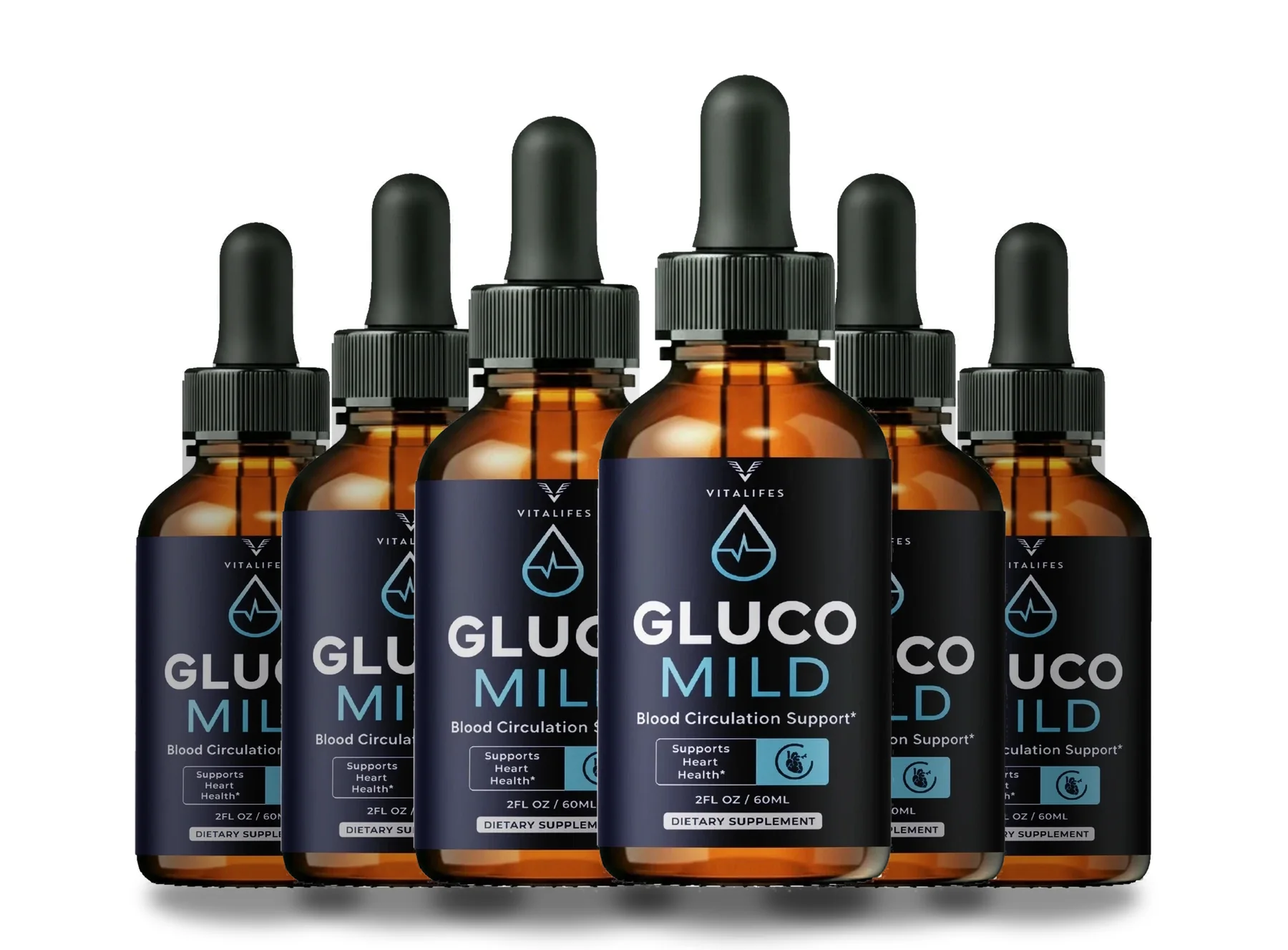
Gluco Mild Official Website › Blog › What Two Drops Cannot Tell You
What Two Drops Of Gluco Mild Cannot Tell You
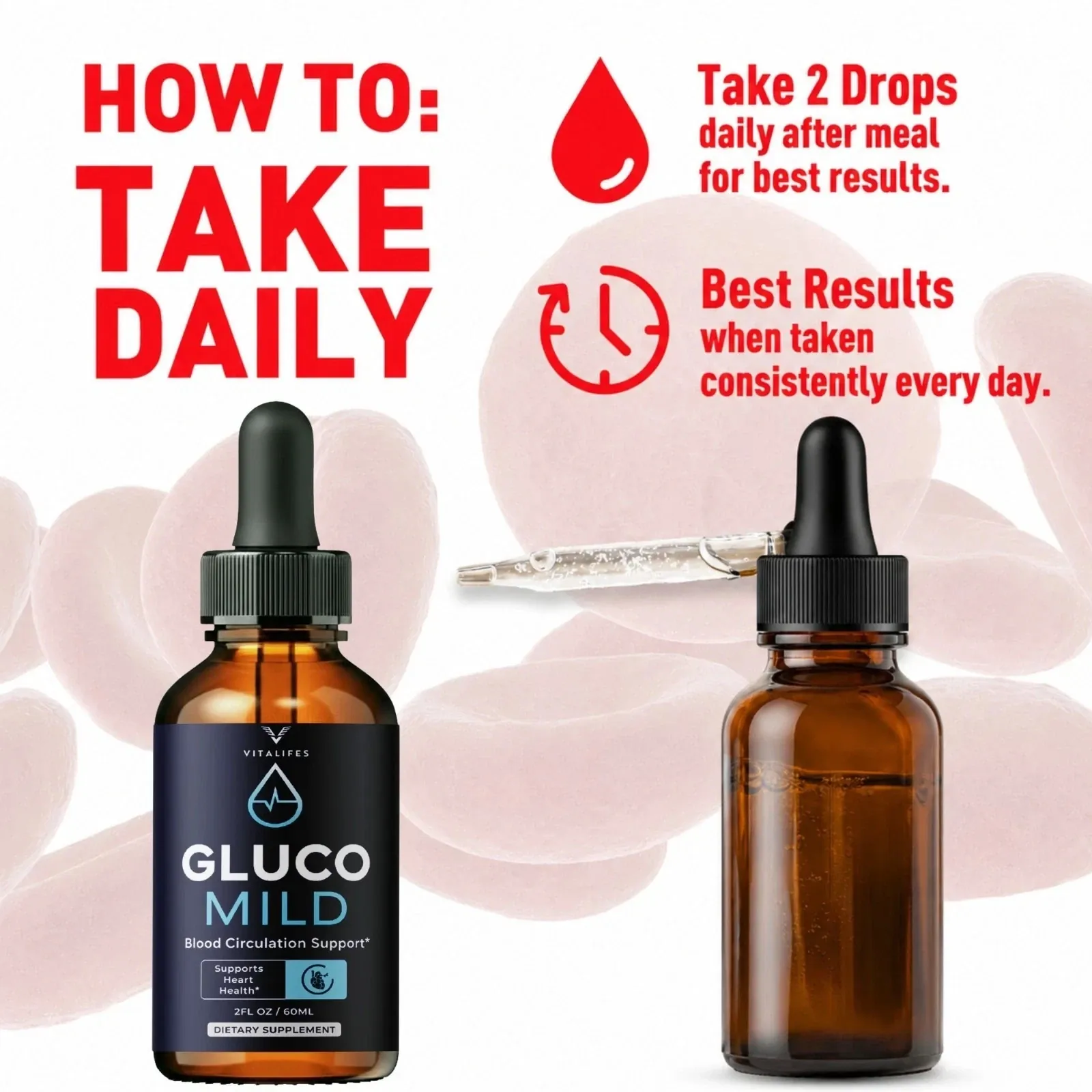
The directions are clear and easy to follow: two drops after a meal, every day. What they cannot give you is a quantity, because a drop is not a unit of measurement and this label carries nothing that would turn one into a number.
- The directions print two drops daily after a meal, and nothing else.
- A drop is a variable quantity that depends on the dropper, the liquid and the hand.
- No extraction ratio is printed, so a volume cannot be converted into plant material.
- No amount is printed for any of the seven botanicals.
- The trials behind these plants ran at tens to hundreds of milligrams a day for months.
- A one-a-day routine is genuinely easier to keep up than the three-times-daily schedules several of those trials used.
What the directions say, and what they do well
The directions graphic prints two sentences: “Take 2 Drops daily after meal for best results.” and “Best Results when taken consistently every day.”.
Start with what is good about that, because it is easy to overlook while working towards the criticism. It is unambiguous. It names a time relative to something that happens every day anyway, which is the single most effective piece of adherence design available to a supplement. And it names consistency explicitly, which most labels leave to the customer to infer.
Several of the trials behind these plants used three-times-daily schedules. A once-a-day dropper after dinner is substantially easier to sustain for twelve weeks than that, and sustaining it for twelve weeks is the only way anybody finds out anything.
A drop is not a unit of measurement
Now the difficulty, and it is structural rather than a criticism of this particular seller.
Milligrams, millilitres and grams are units. A drop is an outcome: the volume of liquid that happens to detach from a particular tip under particular conditions. Pharmacopoeial work traditionally treats twenty drops of water as roughly a millilitre, which is a serviceable approximation for water and a shakier one for a botanical tincture.
| What changes the size of a drop | How much it moves it | Who controls it |
|---|---|---|
| The bore of the dropper tip | Substantially. This is the largest single factor. | The manufacturer, once, at the point the bottle is filled. |
| The viscosity of the liquid | Noticeably. A thicker tincture forms a larger drop. | The formulation, and the batch. |
| Temperature | Slightly, through viscosity and surface tension. | The room the bottle is kept in. |
| How fast the bulb is squeezed | Noticeably, especially when squeezed hard. | You, every single day. |
| The angle the bottle is held at | Slightly. | You. |
Five variables. Two of them are yours, and neither is something anyone thinks about while making a cup of tea.
None of that makes drops a bad delivery format. They have been used for a very long time and they work perfectly well for a preparation whose exact quantity is not the point.
It does mean that two drops is a routine rather than a dose. Two drops from this bottle and two drops from a different one are not the same quantity of anything, and two drops on a cold morning are not quite two drops on a warm evening.
The number that would close the arithmetic
Suppose the drop problem were solved and you knew exactly how many millilitres a serving was. You would still not know how much plant material it contained.
A tincture is plant material extracted into a solvent, and the figure that connects the two is the extraction ratio: 1:4, 1:5, and so on, telling you how much dried herb went into how much finished liquid. Alongside it belongs the solvent and its strength, because what comes out of a plant depends heavily on what it was put into.
This label states neither. So there are two missing links in the chain rather than one, and the second cannot be worked around by any amount of careful measuring at the kitchen table.
The extraction ratio. The solvent and its strength. The amount of extract, or of a standardised constituent, per stated volume. With those three a reader can compare a tincture against the literature. Without them nobody can, including the seller.
What the trials used, for scale
It is worth seeing the size of the gap rather than being told about it. These are the daily amounts the published work behind five of these seven plants actually ran at.
| Botanical | Daily amount its trials used | What this label prints |
|---|---|---|
| Gotu kola (leaf) | 180 mg a day of the standardised total triterpenic fraction, three times daily, in people with venous hypertension | No amount on the bottle |
| Chinese hawthorn (fruit) | 900 mg a day of the standardised extract WS 1442, for 24 months, alongside prescribed heart-failure treatment | No amount on the bottle |
| Horse chestnut | 50 mg of standardised seed extract twice daily for eight weeks | No amount on the bottle |
| Stone root (root) | No human trial exists at any dose. The modern record is one 1999 phytochemistry paper and two nineteenth-century case notes | No amount on the bottle |
| Motherwort | No human cardiovascular trial exists at any dose. The record is traditional use plus cell and animal pharmacology | No amount on the bottle |
The right-hand column reads the same on every row of the full seven, and that is the finding rather than a gap in the table.
The gotu kola dose-ranging trial is the most instructive of these, because it compared two amounts directly rather than against placebo, and found that 180 milligrams a day of the standardised total triterpenic fraction outperformed 90. Dose mattered, measurably, within the range that was tested.
The horse chestnut tablet study ran 50 milligrams of standardised seed extract twice daily for eight weeks. The pooled butcher’s broom analysis covered a combination product at 150 milligrams of root extract twice daily. The grape seed trial used 200 to 400 milligrams a day for twelve weeks. The hawthorn trial ran 900 milligrams a day of one standardised extract for two years.
Those are the numbers on one side of the comparison. On the other side is a blank, and no arithmetic performed on drops closes it.
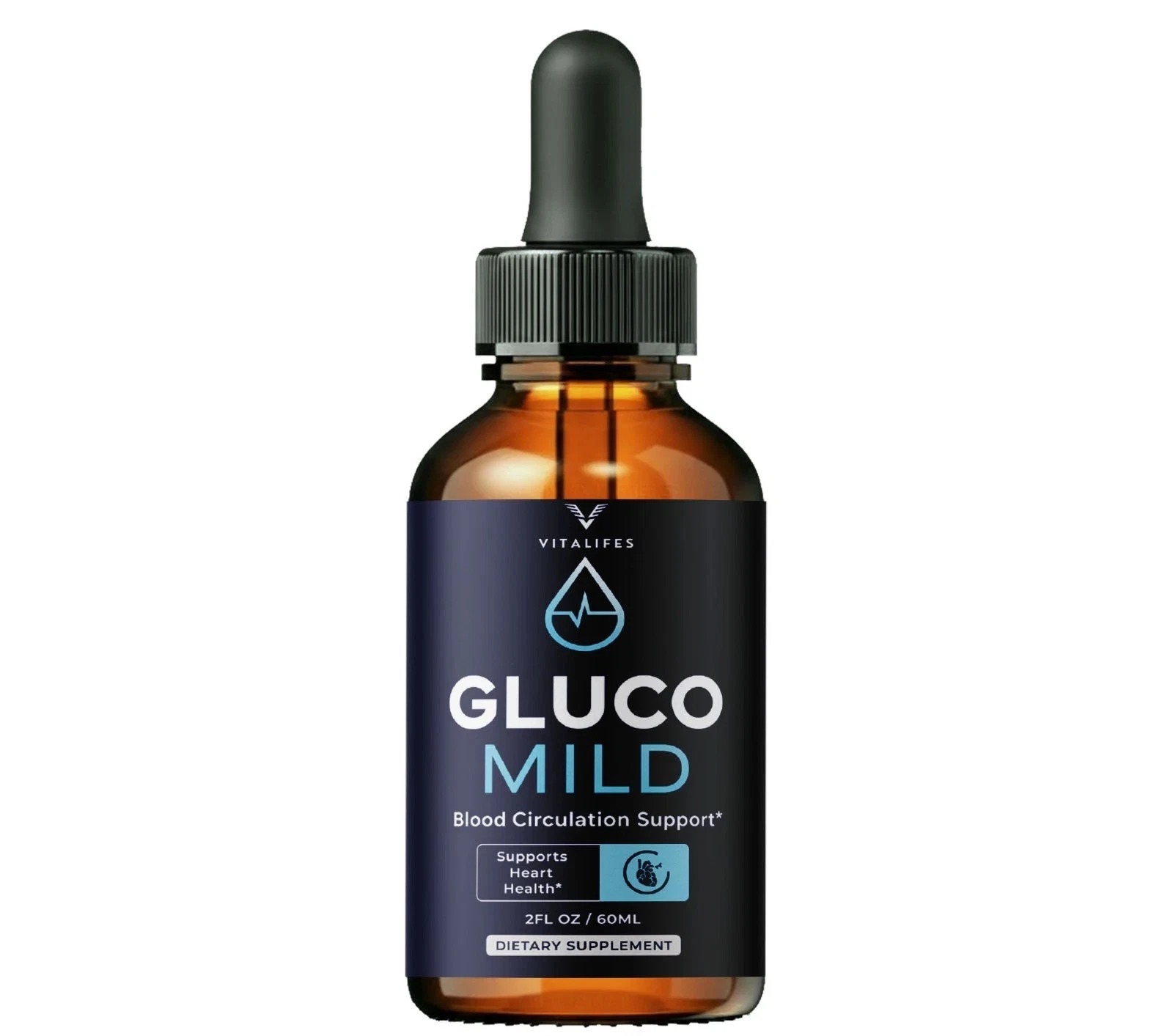
See the full Gluco Mild comparison
All seven botanicals, each beside the daily amount its published trials used, with the source against every figure. The right-hand column is the same on every row, and that is the point of the table.
Seven named botanicals · 2 fl oz (60 ml) · price and return window shown at checkout
Order Gluco Mild On The Official WebsiteTwo drops daily after a meal · 2 fl oz (60 ml) a bottle · lot GLU-26/TH-7250
The two-millilitre problem
There is a second, smaller discrepancy worth knowing about.
The marketplace listing this desk hands orders to describes 2 ml per serving, 30 servings. The bottle directs two drops daily after a meal. Two millilitres is in the region of forty drops. Those two directions are not one serving expressed in two units. They stand roughly a factor of twenty apart.
The rule this website applies is simple and it does not change. The bottle wins. The bottle is what arrives in your box, its directions are what the manufacturer printed on the product, and a listing description is marketing copy written by whoever built the page.
Follow the bottle. If the bottle you receive directs something different from two drops after a meal, that is worth a call to the order desk on +1 (302) 200-3480 before you start, because it means you are holding a different set of directions from the ones described here.
What a liquid label can do better
None of the difficulties above is unavoidable, which is worth demonstrating rather than asserting. Liquid herbal products exist that a reader can place against the literature, and they manage it by printing three or four extra characters.
The first is the extraction ratio, written as a pair of numbers: 1:2, 1:4, 1:5. It says how much dried plant material went into how much finished liquid, and it is the hinge the whole calculation turns on.
The second is the solvent and its strength, usually an ethanol percentage. Different solvents pull different compounds out of the same plant, so two tinctures made at the same ratio from the same herb can be materially different preparations.
The third is a serving stated in millilitres rather than in drops, often as a volume delivered by a marked dropper. This is the one that removes the variability in the table above, because it takes the hand out of the measurement.
The fourth, where it exists, is a standardisation figure for at least the lead ingredient. With that, a serving can be set directly against the trial doses further up this page and the comparison means something.
- An extraction ratio turns a volume into plant material.
- A solvent strength says what was extracted in the first place.
- A serving in millilitres removes the variability a drop introduces.
- A standardisation figure makes the result comparable with the published work.
- None of the four costs anything to print, and a label carrying all four is a label that expects to be checked.
What is still worth knowing
A post like this can read as a demolition, so it is worth being clear about what survives it.
The routine is sound. One serving a day, attached to a meal, with consistency named on the label, is a better adherence design than most of this category manages and better than several of the trials it borrows its reputation from.
The ingredient list is published in full, in order, with most plant parts named. That is more than a good deal of competing packaging offers, and it is what makes the comparison above possible at all.
What cannot be recovered is the quantity. Nobody reading this label can say how much gotu kola a serving contains, and neither can this desk, because the figure is the seller's to publish and it has not been published. Everything on this website is written on that footing.
- Take it the same way every day, after the same meal, or the twelve weeks will not happen.
- Judge it at eight to twelve weeks, which is when the published work took its measurements.
- Do not double up after a missed day. More than the label says is not a faster version of the same thing.
- Keep the dropper clean and the cap tight; a tincture left open loses solvent and changes.
- If the bottle and the listing disagree, follow the bottle.
References
- De Sanctis MT, Belcaro G, Incandela L, et al. Treatment of edema and increased capillary filtration in venous hypertension with total triterpenic fraction of Centella asiatica: a clinical, prospective, placebo-controlled, randomized, dose-ranging trial. Angiology. 2001;52 Suppl 2:S55-9. PMID 11666125. https://pubmed.ncbi.nlm.nih.gov/11666125/
- Dickson S, Gallagher J, McIntyre L, et al. An open study to assess the safety and efficacy of Aesculus hippocastanum tablets (Aesculaforce 50mg) in the treatment of chronic venous insufficiency. J Herb Pharmacother. 2004;4(2):19-32. PMID 15364642. https://pubmed.ncbi.nlm.nih.gov/15364642/
- Boyle P, Diehm C, Robertson C. Meta-analysis of clinical trials of Cyclo 3 Fort in the treatment of chronic venous insufficiency. Int Angiol. 2003;22(3):250-62. PMID 14612852. https://pubmed.ncbi.nlm.nih.gov/14612852/
- Odai T, Terauchi M, Kato K, et al. Effects of Grape Seed Proanthocyanidin Extract on Vascular Endothelial Function in Participants with Prehypertension: A Randomized, Double-Blind, Placebo-Controlled Study. Nutrients. 2019;11(12):2844. PMID 31757033. https://pubmed.ncbi.nlm.nih.gov/31757033/
- Holubarsch CJ, Colucci WS, Meinertz T, et al. The efficacy and safety of Crataegus extract WS 1442 in patients with heart failure: the SPICE trial. Eur J Heart Fail. 2008;10(12):1255-63. PMID 19019730. https://pubmed.ncbi.nlm.nih.gov/19019730/