Gluco Mild Official Website › Blog › Heavy Legs
Heavy Legs: When To Be Seen, Not Supplemented
Most tired, aching legs are exactly what they look like. A few are not, and the difference is usually recognisable without any medical knowledge. This is the post that costs this website a sale, and it is the one that makes the others worth reading.
- Swelling in one leg that came on quickly is an urgent question, not a supplement question.
- A hot, red, tender leg is treated rather than waited out.
- Skin that has darkened, hardened or broken near the ankle has moved past the point where a tincture is relevant.
- Compression has the strongest evidence in conservative management of venous symptoms.
- Write down a symptom score before you start anything, because an impression at week twelve cannot be compared with an impression at week zero.
What ordinary venous symptoms look like
The mechanism literature describes chronic venous disease as a failure of the valves and the vessel wall to return blood upward efficiently. Pressure rises in the small vessels, fluid moves into the tissue, and the inflammatory response that follows produces the familiar set of complaints.
In practice that means legs that feel heavy and tired by the afternoon, an ache that is worse after standing and better after walking or lying down, ankles that mark when a sock comes off, and visible veins that may or may not bother you. It is usually both legs, usually gradual over years, and usually worse in warm weather.
This is extremely common. It gets more common with age, with hours spent standing still, with weight and with pregnancy, and it runs in families. For a great many people it is a nuisance rather than a disease, and managing the nuisance sensibly is a reasonable thing to want to do.
What should not wait
A small number of presentations look similar at a glance and are not the same thing. These are worth knowing by heart, because the cost of recognising one late is much higher than the cost of an unnecessary appointment.
| What you notice | Why it matters | How soon |
|---|---|---|
| Swelling in one leg that came on over hours or days | Asymmetry that appears quickly is the pattern a clot produces, and that is an urgent question rather than a supplement question. | Same day |
| A leg that is hot, red and tender along a line | Inflammation following the course of a vein, or a skin infection. Both are treated, and neither improves with waiting. | Same day |
| Skin near the ankle that has darkened, hardened or broken | These are the later stages of venous disease, and they are the point at which treatment options change entirely. | Within days |
| Swelling with breathlessness or chest discomfort | Two systems at once. This is not a leg question. | Immediately |
| An ulcer that has not healed in two weeks | Wound healing in a leg with venous disease needs a plan, usually including compression. | Within days |
These are patterns worth acting on rather than a diagnostic tool. The point of the table is that four of the five are recognisable without any medical knowledge at all.
The asymmetry pattern in the first row is the one to internalise. Ordinary venous symptoms are usually bilateral and usually gradual. A single leg that swells over hours or days, particularly with pain in the calf, is a different question and it is answered with a scan rather than with a bottle.
None of this means a person with these symptoms has something serious. It means the question is worth settling quickly, by somebody who can examine the leg, and that no supplement belongs in the interval while it is unsettled.
What an assessment actually consists of
People delay in part because they imagine something more elaborate than what happens. The 2023 American vascular-society guidelines and the European Society for Vascular Surgery guidelines both set out the standard pathway, and it is short.
| What an assessment usually involves | What it settles |
|---|---|
| A history: how long, which leg, what makes it worse, what you do all day | Whether the pattern is venous at all, or something else wearing the same clothes. |
| Looking at both legs standing up | Visible veins, skin changes and asymmetry are far easier to see with gravity working. |
| A duplex ultrasound scan where it is indicated | Whether the valves are competent and where the reflux is. This is the test the treatment decision is built on. |
| A symptom score recorded at the start | A number to compare against later, which is the thing an impression can never give you. |
Drawn from the published clinical practice guidelines cited below. The last row is the one worth borrowing whether or not you go anywhere.
A history and a look at both legs standing up covers most of it. Where reflux needs confirming, a duplex ultrasound scan is painless, takes a few minutes and requires no preparation.
The useful output is not only a diagnosis. It is a baseline: a description of what the legs were like on a particular day, which is what any later judgement has to be measured against.
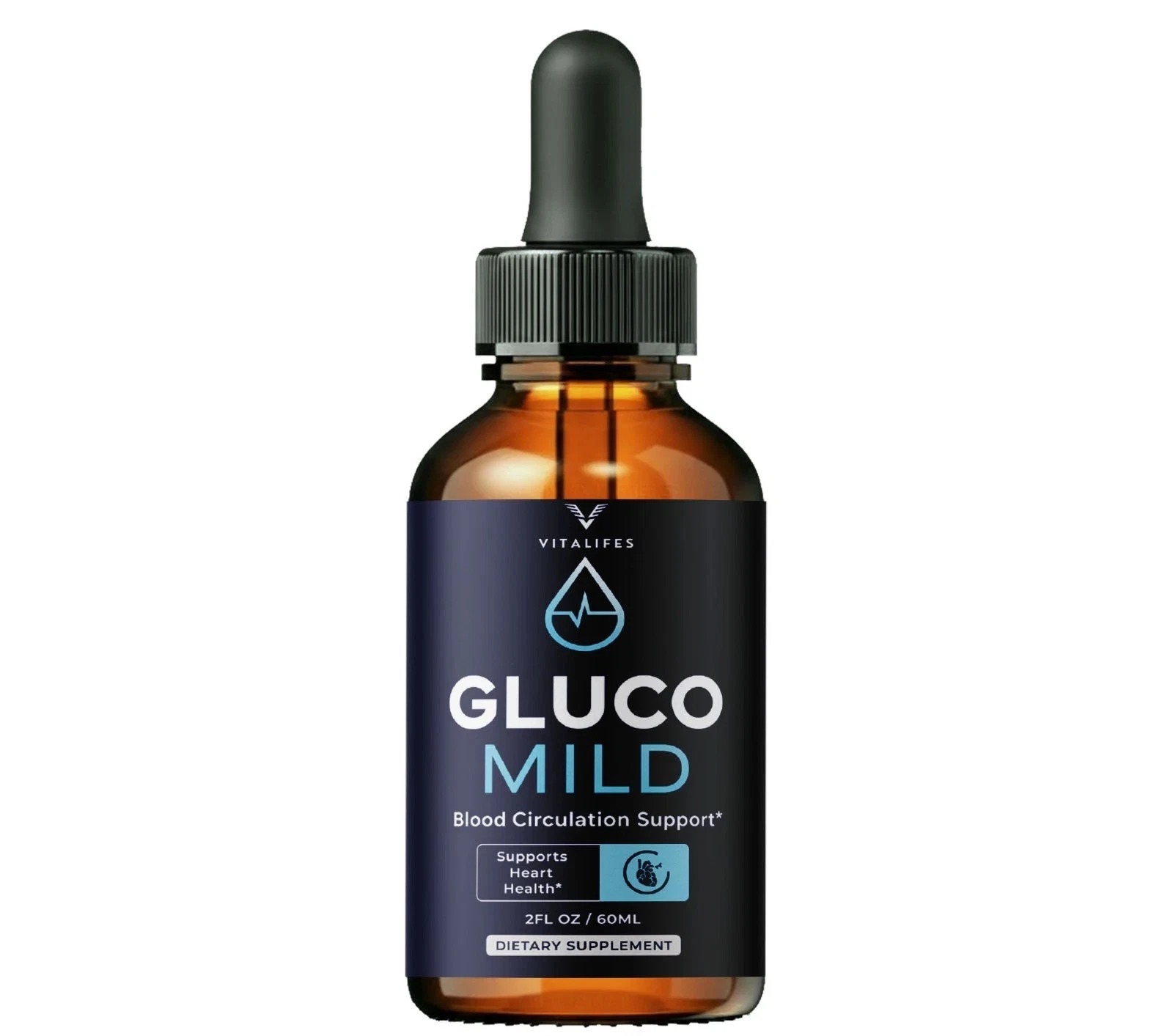
Order Gluco Mild after that question is settled, not instead of it
A tincture is for the ordinary version of these symptoms, alongside the things that move them more. It is not a way of finding out whether something else is going on.
Seven named botanicals · 2 fl oz (60 ml) · price and return window shown at checkout
Order Gluco Mild On The Official WebsiteTwo drops daily after a meal · 2 fl oz (60 ml) a bottle · lot GLU-26/TH-7250
The intervention with the best evidence
This is the part a supplement retailer has the least incentive to write and the most reason to.
Both guideline sets place graduated compression at the front of conservative management of venous symptoms. It has better evidence than any oral preparation in this area, it is available without a prescription, and it works by directly opposing the mechanism that produces the symptoms.
It is also, plainly, less pleasant than taking drops after dinner. Stockings are warm, they are difficult to put on, and they have to be worn to do anything. That is the honest trade, and it is the reason the evidence and the sales figures in this category point in different directions.
Alongside it sit movement, elevation and weight. The calf muscle is the pump that returns blood from the leg, so standing still is worse than either walking or sitting. Twenty minutes with the legs above the hips does more for an afternoon's swelling than any oral preparation claims to.
- Graduated compression, worn on the days it matters rather than owned and unused.
- Walking, specifically: the calf pump is the mechanism.
- Breaking up long periods of standing still, which is harder than it sounds in some jobs.
- Twenty minutes of elevation in the evening.
- Weight, where it applies, named without enthusiasm because it is the hardest of the five.
Write the number down before you start
Here is the single most useful habit in this entire category, and it costs nothing.
Before starting anything, write down a score. Heaviness out of ten. Aching out of ten. Whether the sock mark is there at six in the evening, yes or no. The date. Then put it somewhere you will find it in three months.
The reason is that memory is a poor instrument for this. Symptoms that change slowly are almost impossible to compare against a recollection, and the direction of the error is not random: somebody who has spent money on a bottle tends to remember week zero as worse than it was.
Every trial in this literature did exactly this. The horse chestnut review pooled trials measuring leg volume and symptom scores at the start and at the end. The phlebotonics review pooled the same kind of endpoint across the class. A measurement at week zero is the only thing that makes a measurement at week twelve mean anything.
Heaviness, aching and the sock mark, with the date. Take them again at week four, week eight and week twelve. It is a better experiment than most people ever run on themselves, and it works whichever way the answer comes out.
Where a supplement fits in that picture
Having said all of that, here is the fair place for a bottle like this one.
The pooled Cochrane evidence for the venoactive class suggests a slight reduction in oedema against placebo, with low-certainty evidence for several symptom measures. That is a real finding and a modest one. It describes an adjunct, not a treatment.
So the sensible sequence is: settle the urgent question if any of the patterns above apply; put compression, movement and elevation in place because they are the larger lever; write down a score; and then, if you want to, add a supplement and give it the twelve weeks the trials used.
A bottle taken instead of the first three steps is being asked to do work it has never been shown to do. A bottle taken alongside them is being asked to contribute at the margin, which is what the evidence supports and is not nothing.
What this particular label can tell you about its own contribution is limited, because it names seven botanicals and prints an amount for none of them. That is covered in full on the ingredients page, and it is the reason this post spends its length on the things that can be measured.
References
- Gloviczki P, Lawrence PF, Wasan SM, et al. The 2023 Society for Vascular Surgery, American Venous Forum, and American Vein and Lymphatic Society clinical practice guidelines for the management of varicose veins of the lower extremities. Part II. J Vasc Surg Venous Lymphat Disord. 2024;12(1):101670. PMID 37652254. https://pubmed.ncbi.nlm.nih.gov/37652254/
- De Maeseneer MG, Kakkos SK, Aherne T, et al. Editor's Choice - European Society for Vascular Surgery (ESVS) 2022 Clinical Practice Guidelines on the Management of Chronic Venous Disease of the Lower Limbs. Eur J Vasc Endovasc Surg. 2022;63(2):184-267. PMID 35027279. https://pubmed.ncbi.nlm.nih.gov/35027279/
- Mansilha A, Sousa J. Pathophysiological Mechanisms of Chronic Venous Disease and Implications for Venoactive Drug Therapy. Int J Mol Sci. 2018;19(6):1669. PMID 29874834. https://pubmed.ncbi.nlm.nih.gov/29874834/
- Martinez-Zapata MJ, Vernooij RW, Simancas-Racines D, et al. Phlebotonics for venous insufficiency. Cochrane Database Syst Rev. 2020;11(11):CD003229. PMID 33141449. https://pubmed.ncbi.nlm.nih.gov/33141449/
- Pittler MH, Ernst E. Horse chestnut seed extract for chronic venous insufficiency. Cochrane Database Syst Rev. 2012;11(11):CD003230. PMID 23152216. https://pubmed.ncbi.nlm.nih.gov/23152216/