Gluco Mild Official Website › Blog › Not A Blood Sugar Supplement
Gluco Mild Is Not A Blood Sugar Supplement
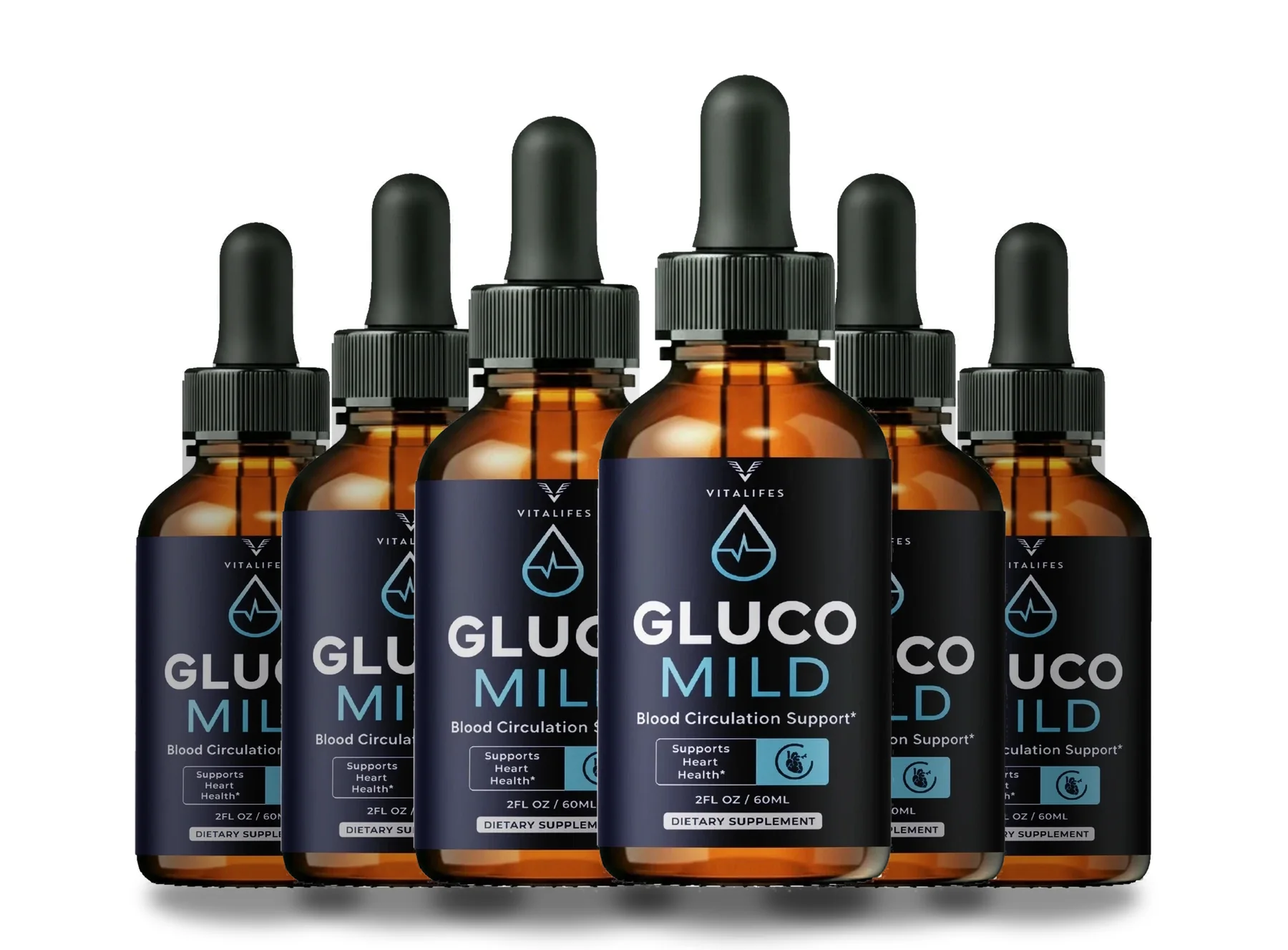
The name begins with four letters that mean sugar, and the bottle never mentions it. Not on the front, not on the ingredient graphic, not in the directions. This is what the label does say, and why a retailer is going out of its way to tell you.
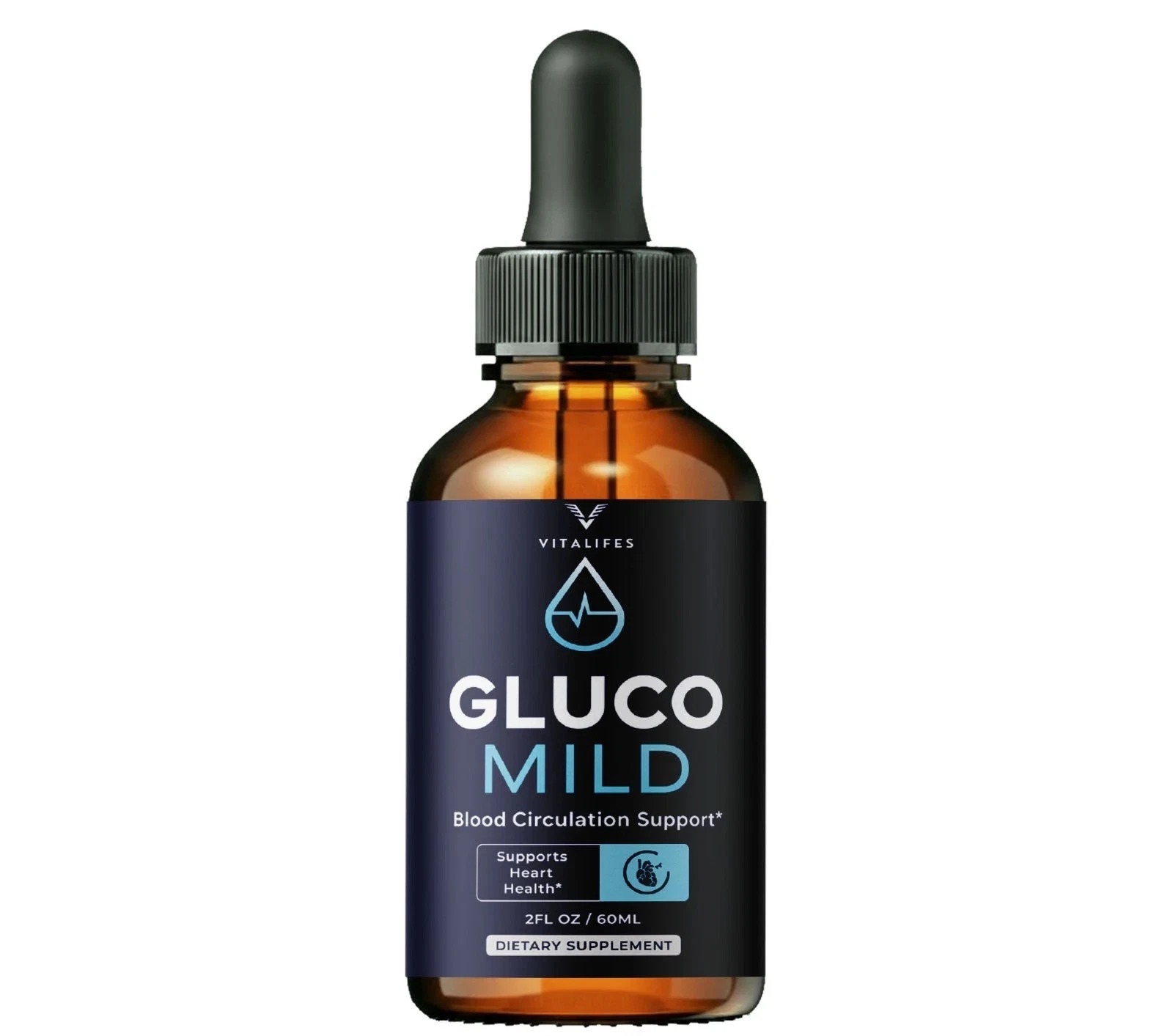
- The front label carries two claims and both are about circulation and the heart.
- The word glucose does not appear on the bottle, the ingredient graphic or the directions.
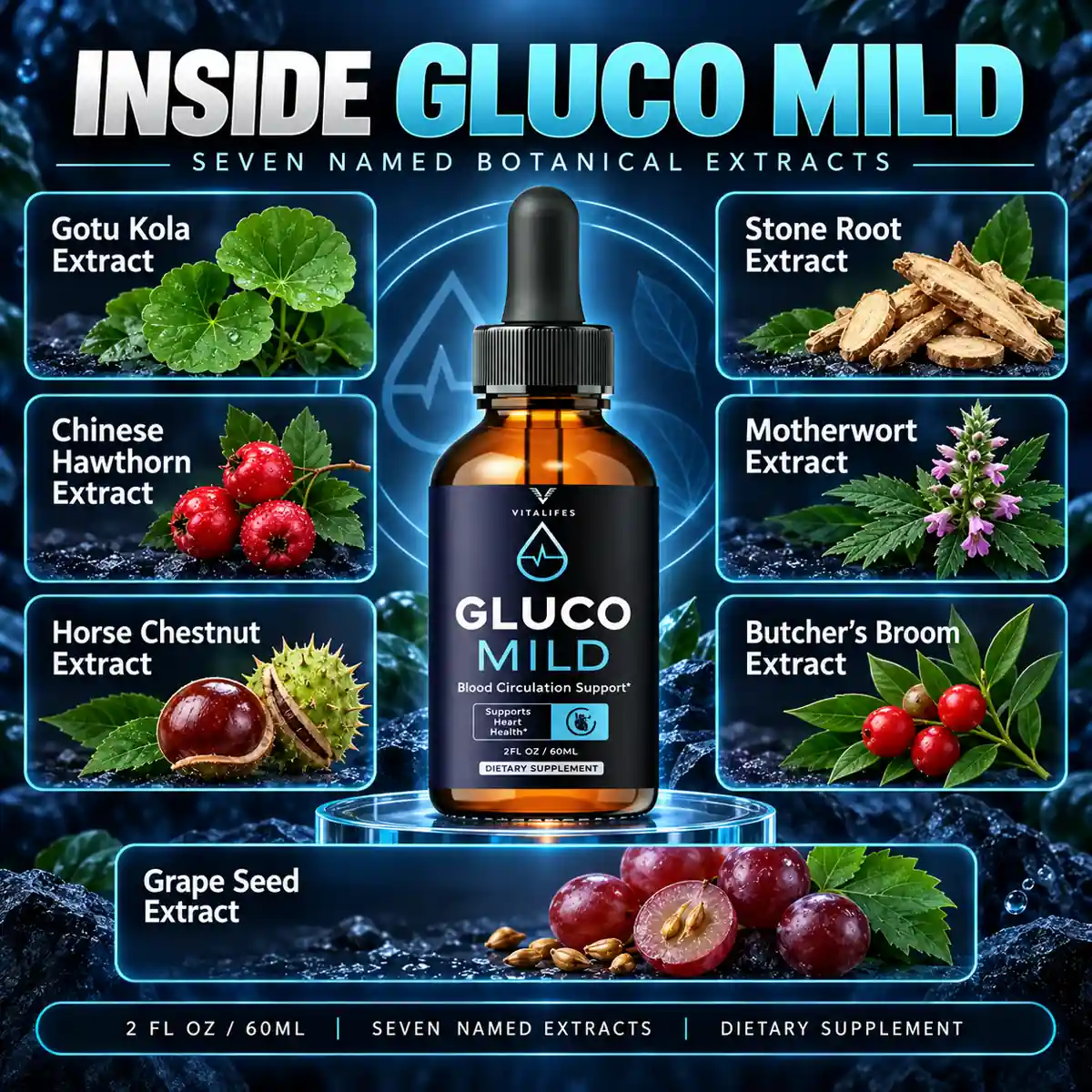
- Five of the seven botanicals belong to the venous literature and four appear by name in the Cochrane review of the category.
- One ingredient, grape seed, has a modest glycaemic literature. It is not enough to build a product claim on and this website does not.
- A differently formulated product built on chromium is sold under a similar name elsewhere. It is not this bottle.
What the packaging actually prints
Six label and marketing graphics plus four pack renders were opened at full resolution before this post was written, and the table below is a transcription rather than a summary.
Read down the right-hand column first. It is the same answer seven times.
| Where on the packaging | What it actually prints | Anything about blood sugar? |
|---|---|---|
| Front label, top | The maker's mark | No |
| Front label, centre | The product name and a droplet-with-pulse device | No |
| Front label, under the name | “Blood Circulation Support” | No |
| Front label, chip beside a heart icon | “Supports Heart Health” | No |
| Front label, foot | 2 FL OZ / 60ML / DIETARY SUPPLEMENT | No |
| Ingredient graphic | Seven named botanical extracts, no amounts | No |
| Directions graphic | “Take 2 Drops daily after meal for best results.” | No |
Every surface the seller publishes, read at full resolution. The word glucose does not appear on any of them, and neither does insulin, A1c or blood sugar.
Two claim lines, then. Blood circulation support, and supports heart health. Both are what American labelling calls structure-and-function claims: statements about an effect on the ordinary workings of the body, which is the only kind a dietary supplement may make.
Neither has been reviewed by any agency before sale, which is why the required federal statement appears on the bottle and at the foot of every page on this website. What matters here is narrower. Whatever those two claims are worth, they are the ceiling, and neither of them is about sugar.
Supplement names are chosen to be memorable and available. A name that sounds like a mechanism has not been through any process that would make it one, and the place to check what a product says it does is the claim line under the name.
What the seven plants are for
If the name were a clue, the ingredient list would carry it. Chromium, cinnamon, berberine, bitter melon, alpha-lipoic acid, gymnema: these are the names that populate a glycaemic formula, and not one of them is here.
What is here is a venous set.
| The seven names | What the research record is about |
|---|---|
| Gotu kola (leaf) | Venous hypertension, capillary filtration and ankle oedema |
| Chinese hawthorn (fruit) | Chronic heart failure, at a standardised extract dose |
| Horse chestnut (seed) | Chronic venous insufficiency: leg pain, swelling, itching |
| Stone root (root) | No human trial exists in any indication |
| Motherwort | Traditional cardiotonic use; no randomised human cardiovascular trial |
| Butcher's broom (root) | Chronic venous insufficiency, usually in a combination product |
| Grape seed | Blood pressure and endothelial function, at 200-400 mg a day |
Five of the seven sit squarely in the venous and circulatory literature. None of the seven has a blood-sugar indication behind it, and the one with any glycaemic evidence at all is discussed below.
Four of these — gotu kola, horse chestnut, butcher's broom and hawthorn — are assessed by name in the 2020 Cochrane review of phlebotonics, which pooled the randomised evidence for the whole venoactive class. That review is the closest thing this field has to a settled answer, and it is about legs.
The mechanism literature describes what the class is proposed to do: raise the tone of the vein wall, reduce how much fluid leaks from the capillaries, damp the inflammation that follows. a 2024 update on herbal drugs in venous disease covers the same plants from the pharmacology end.
This is a coherent formula for one thing and it is not the thing the name suggests. That is worth stating plainly rather than leaving a reader to work out from an ingredient list.
The one ingredient with glycaemic evidence
There is exactly one place where an honest answer gets more complicated, and it is worth handling rather than skipping.
Grape seed extract does have a glycaemic literature. A 2020 systematic review and meta-analysis looked at its effects on glycaemic control, lipoproteins, inflammation and body weight across randomised trials. A four-week crossover trial in type 2 diabetes examined metabolic markers, vascular tone and insulin sensitivity in people at high cardiovascular risk.
So the evidence exists. Three things stop it becoming a claim about this bottle, and they are cumulative rather than alternative.
- The effects are small. This is a literature of modest changes in markers, not of clinically decisive results, and the reviews say so themselves.
- The doses are specific and large. The grape seed trials ran at two to four hundred milligrams a day of a standardised proanthocyanidin extract, for twelve to sixteen weeks.
- This label prints no amount. Grape seed is the seventh of seven names on a graphic with no figures on it, in a liquid with no extraction ratio. There is no way to know what a two-drop serving delivers, and therefore no way to argue it resembles a trial dose.
Those citations are in the reference list below for a reason that is worth naming. They are there so this post can describe what the evidence is and then decline to build on it, rather than leaving a gap where a reader might assume something stronger was being hidden.
Read the Gluco Mild ingredient list before the name
Seven botanicals, five of them from the venous literature, and two claim lines that never mention sugar. The ingredients page sets each name beside the daily amount its published trials used.
Seven named botanicals · 2 fl oz (60 ml) · price and return window shown at checkout
Order Gluco Mild On The Official WebsiteTwo drops daily after a meal · 2 fl oz (60 ml) a bottle · lot GLU-26/TH-7250
The other product with a similar name
Search the name and third-party review pages appear describing a product built on chromium with a twenty-item ingredient list. That is a different formulation. It is not the bottle photographed on this website, it does not share this ingredient graphic, and nothing written about it transfers here.
This is not unusual in the supplement trade. Names are cheap, similar names are common, and a review page written about one product is frequently read by somebody holding another.
The practical defence is the ingredient list. If the bottle in your hand names seven botanical extracts led by gotu kola and Chinese hawthorn, it is this product. If it names chromium and a long list of others, it is not, and this website has nothing useful to say about it.
Why a retailer says this out loud
A seller could let the name do quiet work. Leave it unremarked, let a buyer bring their own assumption, sell a bottle either way. It is a common enough approach and it has an obvious short-term logic.
Two things make it a bad idea here. The first is regulatory: a claim about blood sugar on a supplement would be a disease claim, which turns a product into an unapproved drug. Allowing a name to imply it while the label says otherwise is not a loophole, it is the same problem with a thinner defence.
The second is practical, and it matters more to a reader. Somebody managing blood sugar who buys a circulation tincture by mistake has spent money on the wrong thing and, worse, may have spent attention on it. That is a real cost and it lands on the buyer.
So it is stated here, on the home page, in the disclaimer and in the plain-text factsheet this website publishes for answer engines. Once each, clearly, in the places somebody would actually encounter it.
If a blood sugar supplement is what you wanted
Then this is not it, and the honest thing is to say so and stop rather than to offer a consolation.
Blood sugar is a diagnosed and monitored matter. It is measured with a meter or a laboratory test, it is managed with prescribed treatment where treatment is indicated, and a dietary supplement enters that picture only through whoever is managing it. This website is a retail desk selling a circulation tincture and it is not placed to advise on any of that.
What this bottle is for — heavy legs, ankles that mark, the ache after a day standing — is set out on the who-it's-for page, along with the people it suits poorly. The category evidence, without a product in the way, is in the circulation supplement guide.
References
- Asbaghi O, Nazarian B, Reiner Z, et al. The effects of grape seed extract on glycemic control, serum lipoproteins, inflammation, and body weight: A systematic review and meta-analysis of randomized controlled trials. Phytother Res. 2020;34(2):239-253. PMID 31880030. https://pubmed.ncbi.nlm.nih.gov/31880030/
- Kar P, Laight D, Rooprai HK, et al. Effects of grape seed extract in Type 2 diabetic subjects at high cardiovascular risk: a double blind randomized placebo controlled trial examining metabolic markers, vascular tone, inflammation, oxidative stress and insulin sensitivity. Diabet Med. 2009;26(5):526-31. PMID 19646193. https://pubmed.ncbi.nlm.nih.gov/19646193/
- Martinez-Zapata MJ, Vernooij RW, Simancas-Racines D, et al. Phlebotonics for venous insufficiency. Cochrane Database Syst Rev. 2020;11(11):CD003229. PMID 33141449. https://pubmed.ncbi.nlm.nih.gov/33141449/
- Mansilha A, Sousa J. Pathophysiological Mechanisms of Chronic Venous Disease and Implications for Venoactive Drug Therapy. Int J Mol Sci. 2018;19(6):1669. PMID 29874834. https://pubmed.ncbi.nlm.nih.gov/29874834/
- Bencsik T, Balazs VL, Farkas A, et al. Herbal drugs in chronic venous disease treatment: An update. Fitoterapia. 2024;179:106256. PMID 39419127. https://pubmed.ncbi.nlm.nih.gov/39419127/